Markets right now feel like they’re living at the intersection of geopolitics, energy, and AI

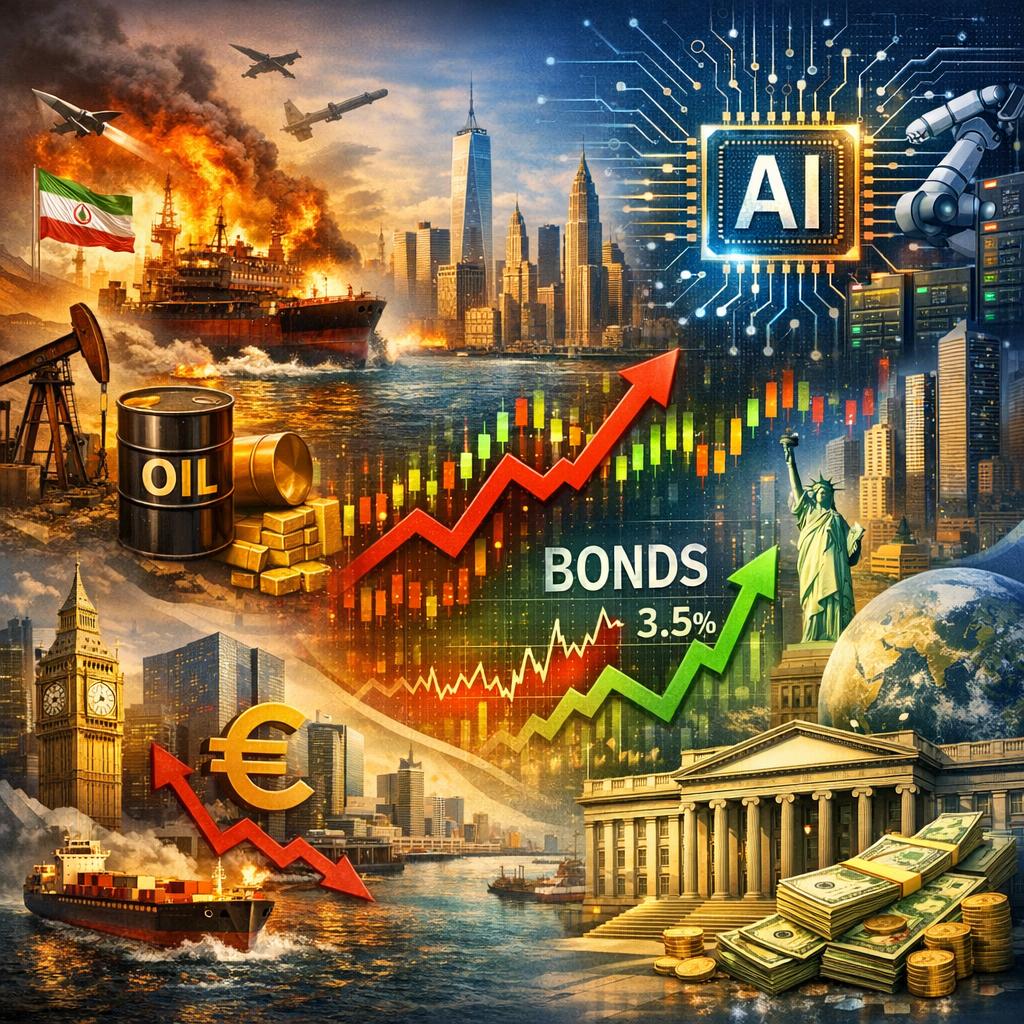
Markets right now feel like they’re living at the intersection of geopolitics, energy, and an AI-driven growth story—and investors everywhere are being forced to make decisions with less certainty and faster-moving inputs.
1) Geopolitics is back in the driver’s seat (and oil is the transmission)
Recent headlines around intensifying US strikes on Iran, warnings from Saudi Aramco about the consequences of a prolonged conflict, and scenario-planning for how the Iran war could unfold are a reminder that geopolitical risk doesn’t show up neatly in economic forecasts. It hits markets through a few very specific channels:
Oil supply and shipping expectations. Even the hint of disruption can move crude dramatically, and we’ve seen sessions described as among the “wildest days” in oil market history—huge intraday swings that can whipsaw anyone positioned too tightly.
Inflation expectations. Energy is still a fast pass into inflation psychology. When crude spikes, investors quickly reassess whether inflation is “done” or just “quiet,” and that flows straight into bond yields and central bank expectations.
Risk appetite. Equities can bounce even on scary news if markets interpret it as time-limited (“could end very soon”) or already priced in. But that kind of bounce can be fragile if the conflict drags on or expands.
Global impact: Investors in Europe and Asia may feel this even more acutely than the US because many economies are more energy-import dependent. Higher oil can squeeze consumers, pressure manufacturers, and worsen trade balances—meaning currency and equity market impacts can compound quickly.
2) Bonds are reacting like the real-time narrative engine
In volatile geopolitical moments, bonds often do the “storytelling” first. Yields move on two competing impulses:
Flight to safety pushes yields down (prices up) as investors seek shelter.
Inflation and deficit worries push yields up, especially if energy shocks raise the odds of sticky inflation.
When those collide, you get sharp back-and-forth moves that can feel disconnected from the day’s equity tape. For global investors, this matters because the US Treasury market is still the anchor for pricing risk everywhere: mortgages, corporate credit, emerging-market funding costs, and even equity valuations.
3) Volatility is exposing hidden leverage and crowded trades
One of the more telling developments in turbulent periods is not just what goes up or down, but who gets hurt. Reports of multi-manager hedge funds taking hits amid the oil-and-bond volatility underscore a basic truth: when volatility jumps, diversification can fail if everyone owns “different versions of the same trade.”
Two takeaways for everyday investors:
Liquidity matters more than forecast accuracy. The ability to stick with a plan beats the ability to predict headlines.
Crowding risk is real. If a trade is consensus (even if it looks “safe”), the exit can be narrow when everyone rushes for the door at once.
4) The AI boom continues—just with a higher bar
On the other side of the market narrative, AI investment is still accelerating: multibillion-dollar chip deals, enormous seed rounds, and heavyweight backers signal that capital is still flowing toward compute and foundational models.
But the market is also getting more selective:
Winners are those who can secure chips, power, and distribution—not just tell a good story.
Valuations can remain high, but they become more sensitive to interest rates. That ties the AI trade back to bonds again: higher real yields can compress multiples, even if revenues are growing.
Global impact: This is a reshaping of industrial policy and corporate strategy across continents—affecting semiconductor supply chains, energy demand (data centers), and labor markets. Investors globally are increasingly exposed to this theme, even indirectly through indexes and pension allocations.
5) What I’m watching (and how I’d translate it into investor behavior)
Here are the practical signposts that matter more than hot takes:
Oil volatility vs. oil level. A steady $90 can be less disruptive than a violent swing between $80 and $95. Volatility tightens financial conditions because businesses and consumers become cautious.
Credit spreads. If corporate borrowing costs widen meaningfully, equity “bounces” can lose credibility fast. Credit is often the early warning system.
The dollar and funding stress. A stronger dollar can export tighter conditions to emerging markets and commodity importers.
Earnings commentary. Guidance around input costs (fuel, shipping, insurance) will reveal whether this is a headline shock or a margin shock.
Positioning and liquidity. Days with big intraday reversals often signal forced flows rather than fresh conviction. That’s where investors can get chopped up if they overtrade.
How investors globally might respond without trying to predict the next headline
Not advice—just a framework that tends to travel well across different countries, tax systems, and portfolio sizes:
Stress-test your exposure to energy and rates. You don’t need to forecast oil; you need to know what happens if energy rises and yields stay higher for longer.
Separate long-term holdings from tactical trades. If you’re investing for years, don’t let a week of geopolitical news trick you into day-trading your retirement plan.
Diversify beyond labels. “International,” “value,” and “tech” can still be highly correlated in a shock. Diversification is about drivers: inflation sensitivity, duration (rate sensitivity), and balance sheet strength.
Keep some dry powder (and emotional bandwidth). Volatility creates opportunity, but only for investors who aren’t forced to sell at the wrong time.
The big picture
This is one of those stretches where the market is juggling two huge forces at once: a geopolitical energy shock risk that can reawaken inflation fears, and an AI capex supercycle that’s pulling capital toward a small number of strategic chokepoints (chips, compute, power). That mix can produce rallies that feel counterintuitive and drawdowns that feel sudden.
For global investors, the challenge isn’t finding certainty—it’s building a portfolio and a mindset that can function when certainty is scarce.