The market isn’t “volatile” right now in the casual sense. It’s volatile in the structural sense

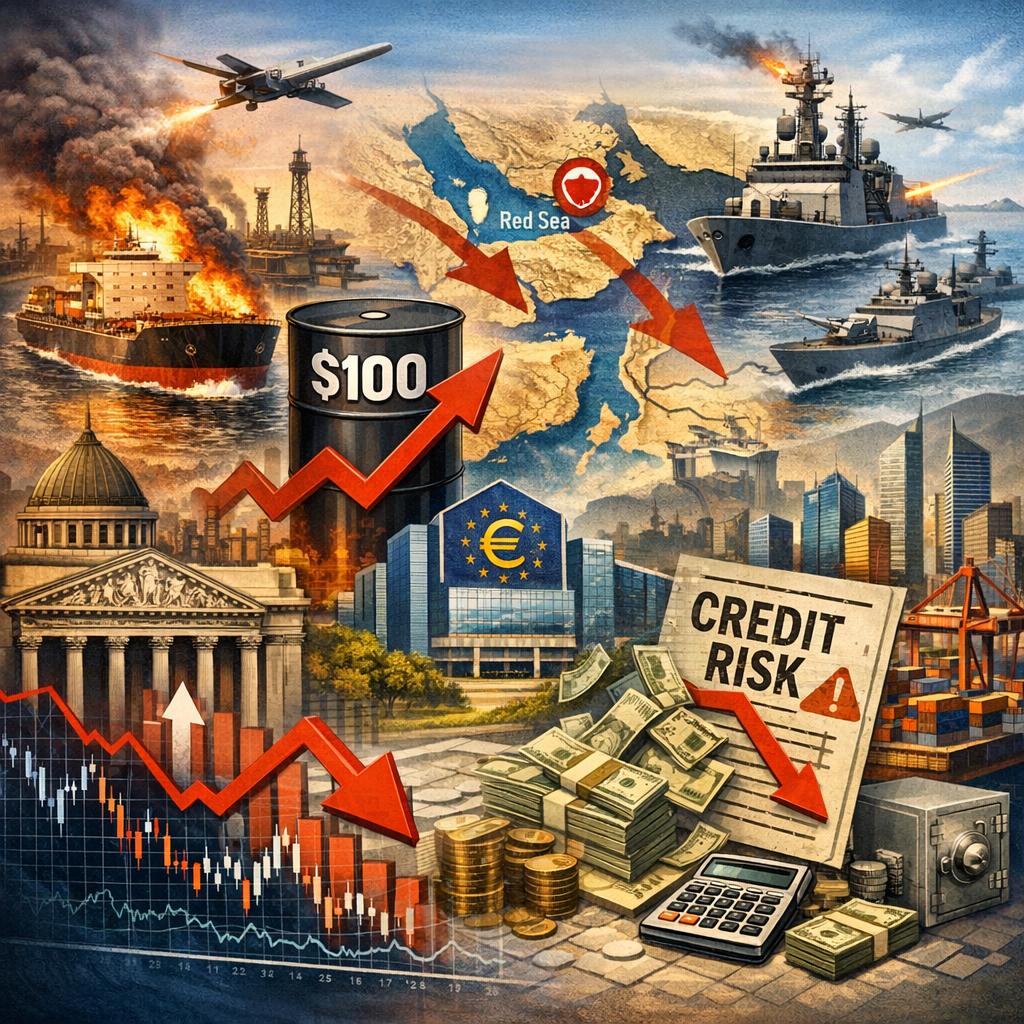
The market isn’t “volatile” right now in the casual sense. It’s volatile in the structural sense: the plumbing of global trade, energy, and credit is being tested at the same time. That combination changes how risk shows up in portfolios—often in places investors aren’t watching closely enough.
Here are the three forces I can’t stop thinking about, and what they mean for investors globally.
1) Energy is back to being a macro lever, not just a sector story
Oil pushing back toward $100 on reports of ships and infrastructure being hit is more than a headline spike. Energy prices are a transmission mechanism. They move inflation expectations, squeeze consumer demand, widen trade deficits for importers, and tighten financial conditions even when central banks don’t touch rates.
Who feels it first?
– Energy-importing countries: Higher fuel costs pressure currencies and can force policymakers to choose between defending FX stability or supporting growth.
– Rate-sensitive equity markets: If oil-driven inflation proves sticky, the “rate cuts will save us” narrative gets delayed.
– Lower-income consumers everywhere: Food, transport, and utilities are where energy shock becomes political and social risk, which markets eventually price.
What I’m watching: not just the oil price, but the reliability of routes and the cost of insurance/shipping. When tankers reroute to avoid one chokepoint only to face risk in another, the market starts pricing “friction” as a semi-permanent feature, not a temporary disruption.
2) Chokepoints and conflict are turning supply chains into a pricing model
For years, investors treated geopolitics as background noise unless it directly hit a major index. That’s changing. When trade routes and strategic corridors become uncertain, it changes corporate margins, inventory strategy, and capital allocation.
The biggest portfolio lesson here: “global diversification” only works if the underlying system is flowing. If the system clogs, correlations can rise in surprising ways:
– Industrials and consumer goods can move like commodities because input costs dominate.
– Some “defensive” businesses become cyclical if their logistics costs spike.
– Countries that look uncorrelated in quiet times can suddenly trade as one risk bucket when shipping and energy are repriced together.
This is also where the market’s focus shifts from earnings growth to earnings quality. Investors pay up for companies that can pass through costs, control their supply chain, or source locally—because reliability becomes a competitive advantage.
3) The private credit conversation is getting louder for a reason
Warnings about private credit default rates rising (and questions about how some portfolios are valued relative to public markets) matter because private credit has quietly become a large pillar of the “stable return” part of many allocations.
Two things can be true at once:
– Private credit can be a useful tool for income and diversification.
– It can also carry valuation and liquidity risks that show up late—especially if refinancing windows close or defaults climb.
What changes in this environment is not just credit risk, but confidence in marks. When public markets reprice quickly and private marks move slowly, investors can mistake “smooth” for “safe.” The real test comes when capital is needed: redemptions, rebalancing, or margin calls elsewhere. Liquidity is the hidden link between separate buckets.
What investors globally can do (without trying to predict headlines)
I’m not a fan of trading every geopolitical update. Most investors don’t need faster reactions—they need sturdier frameworks. A few practical ways to think about it:
A) Stress-test the portfolio for “energy up + growth down”
Many portfolios are positioned for either inflation falling or growth accelerating. The harder scenario is energy-driven inflation that pressures growth. Ask:
– What happens if oil stays elevated for months, not days?
– Which holdings benefit, which quietly break, and which are just “along for the ride”?
B) Treat liquidity like an asset class
Know what you can sell quickly, what you can’t, and what you’re assuming you can sell. If you own private assets, match them with patient capital. If your life or business may require cash, don’t outsource that reality to optimism.
C) Separate “story risk” from “balance-sheet risk”
Geopolitical risk is often narrated, but markets ultimately price cash flows and funding.
– Companies with pricing power and strong balance sheets can absorb shocks.
– Companies dependent on cheap funding, tight logistics, or discretionary spending are more fragile than their narratives suggest.
D) Diversify by drivers, not by labels
Holding multiple regions isn’t enough if they’re all exposed to the same driver (energy, shipping, USD funding, or global demand). True diversification mixes return drivers: different inflation sensitivities, different cash-flow durations, different liquidity profiles.
The bottom line
Global markets are being shaped by a trio that feeds on itself: disrupted energy routes, heightened geopolitical risk around key chokepoints, and tighter scrutiny of where “safe yield” really lives. The investor edge in this kind of tape isn’t bravado. It’s clarity: understand what you own, why you own it, and what conditions would make you change your mind.