The Hormuz Risk Premium Just Got Repriced — And That Matters Far Beyond Oil
One of the most underappreciated forces in global markets is the “invisible line item” investors pay for uncertainty. In commodities, that line item shows up as a risk premium. And this week’s market move around a reported US-Iran pact to reopen Hormuz is a textbook example of how quickly that premium can be marked down—sending ripples through equities, currencies, rates, and even portfolio construction.
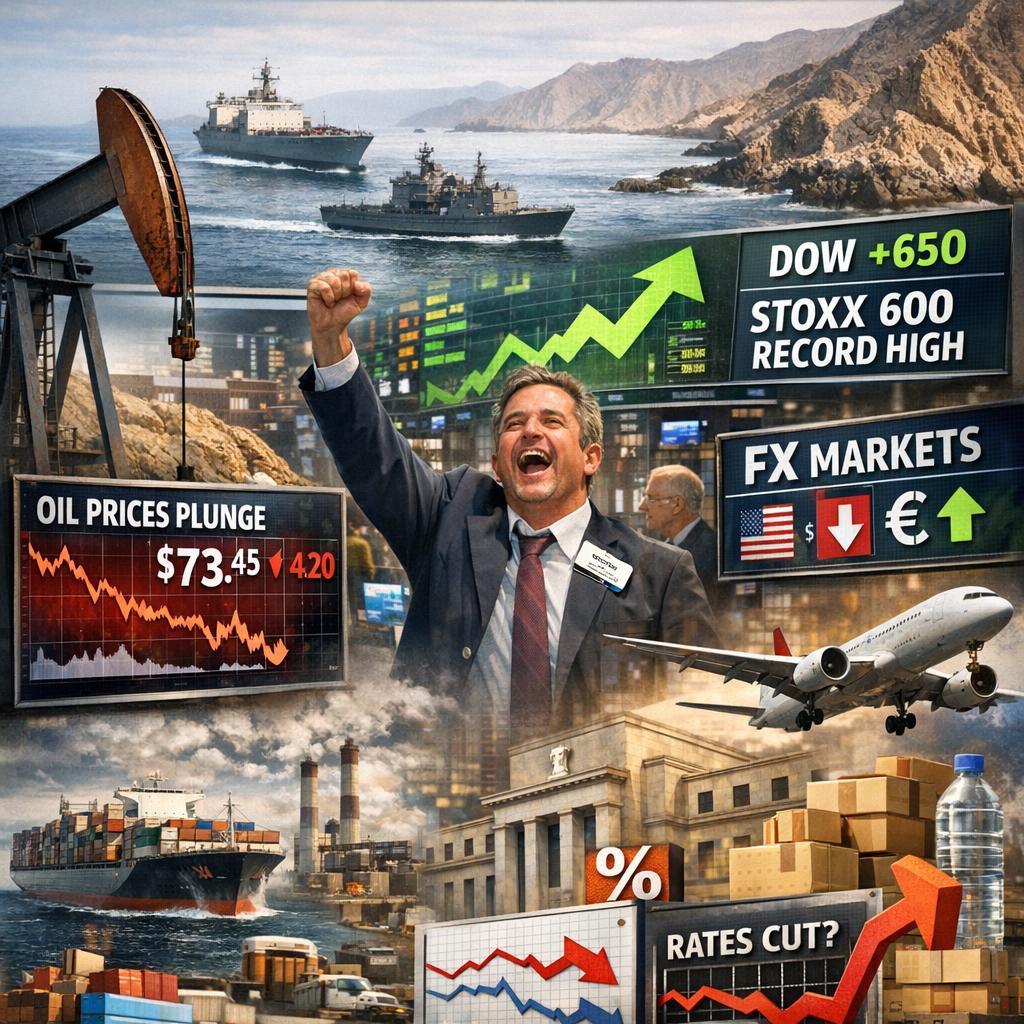
When headlines suggested progress that could reduce disruption risk through the Strait of Hormuz, markets reacted the way they often do when a tail-risk starts to fade: equities rallied sharply, and oil prices dropped. On the surface, it reads like a simple story—less geopolitical risk, cheaper oil, happier markets.
But the deeper takeaway for global investors is about transmission mechanisms.
1) Oil isn’t just “energy exposure.” It’s a global financial input.
Oil is embedded in almost everything: freight, plastics, fertilizer, heating, aviation, industrial production, and the cost base of thousands of companies that don’t look like “energy” at all. So when oil sells off on a geopolitical de-escalation, markets immediately start repricing:
– Inflation expectations (because energy feeds headline CPI and often second-round effects)
– Central bank paths (because falling energy can loosen the inflation constraint)
– Consumer sentiment (because fuel is one of the few prices people see multiple times a week)
– Corporate margins (because input costs shift, sometimes dramatically)
That’s why a Middle East headline can move the Dow, the STOXX 600, and emerging market FX in the same session. The oil chart is just the first domino.
2) The “reopen Hormuz” narrative is a volatility story as much as a price story.
Even if oil doesn’t return to some “prewar” level quickly, the volatility regime matters. Investors tend to underestimate how much damage volatility does even when average prices are manageable.
Lower perceived disruption risk can mean:
– Tighter options pricing (lower implied volatility)
– Better liquidity conditions in risk assets
– More willingness to hold cyclicals and reduce defensive hedges
– A softer bid for certain “insurance” trades (like some forms of long-dollar positioning)
In other words, markets don’t need oil to collapse for risk appetite to improve; they just need the probability-weighted worst-case outcomes to shrink.
3) Winners and losers aren’t as obvious as “airlines up, oil majors down.”
Yes, oil producers can face headline pressure when crude drops. But energy equities don’t always trade tick-for-tick with crude, especially when balance sheets are strong and shareholder returns are a priority. Meanwhile, the beneficiaries of lower energy costs often show up in less glamorous places: chemicals, logistics, industrials, consumer staples with heavy transport exposure, and parts of emerging markets that are structurally energy-importing.
On the flip side, some economies and currencies are quietly levered to oil strength. When crude weakens, certain petro-currencies can lose support, fiscal expectations get trimmed, and the market starts rethinking the trajectory of local rates.
This is where global investors should zoom out: the equity rally is one expression of the same repricing that can reshape country-level allocations and FX risk.
4) The bigger portfolio lesson: geopolitical risk is a correlation switch.
In calm periods, diversification can look easy—your equity baskets spread out, your factor tilts behave, your regional exposures don’t all move together. In stressed periods, correlations jump, and “diversified” can turn into “everything down at once.”
What a headline-driven repricing like this reminds us is that some correlations are conditional. Energy shocks and Middle East risk can flip the correlation between stocks and inflation, or between bonds and equities, depending on the growth/inflation mix. That’s why the same investor can feel well-hedged in one quarter and oddly exposed in the next—without changing a single holding.
So what should investors do with this?
Not chase the headline, but update the framework.
– If you’re equity-heavy globally, pay attention to what’s driving the rally: is it truly improving growth expectations, or simply reduced tail-risk and a mechanical unwind of hedges?
– If you hold international assets, watch FX sensitivity to oil and rates. A calmer energy tape can change the relative attractiveness of carry trades and rate differentials.
– If you use “inflation hedge” buckets, remember that a portion of inflation protection is effectively energy protection. If energy risk premium compresses, that hedge may behave differently than expected.
And one final point that’s easy to miss: these moves tend to arrive before the data does. CPI prints and earnings revisions show up later. Markets, for better or worse, front-run.
If you’re tracking this story too, I’d love to hear how you’re thinking about it: is this a one-week relief rally, or the beginning of a broader risk repricing across global portfolios? Comments welcome.