Trade Wars Reloaded – What the Latest US-China Tariff Escalations Mean for Global Markets

Growing up in Barbados, I learned early on that while we might be small, we’re never isolated from the global tides. A storm in the US or Europe could affect our food prices, tourism flows, and even the rhythm of our currency. Now, living in the UK with a background in tech and studying business for some time, I see even more clearly how deeply connected the financial world is—and how quickly things can shift.
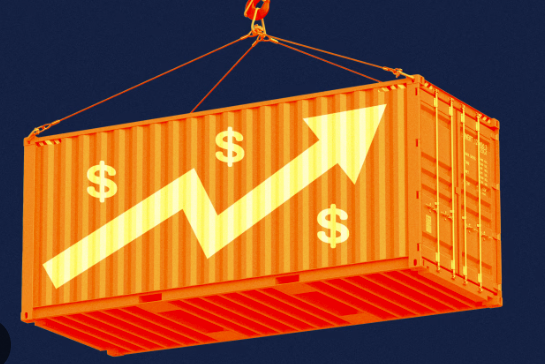
This week, the temperature of global markets rose several degrees. Two news stories brought that into sharp focus: the first, from The Guardian, reported French President Emmanuel Macron’s dire warning of “90 days of uncertainty” in light of the growing trade tensions. The second, from Euronews, confirmed that China has now raised tariffs on some US goods to a jaw-dropping 125%.
If you feel like we’ve stepped into a time machine and landed back in 2018, you’re not wrong.
A Return to Protectionism?
It’s no secret that President Trump has made protectionist economic policy one of his key platforms. With his popularity rising and a potential return to the White House on the cards, investors are beginning to price in the possibility of more tariffs, trade barriers, and economic brinkmanship.
Markets hate uncertainty—and Macron’s comments signal that the European Union, too, is bracing for turbulence. The French leader is no alarmist; when he speaks of a “new phase” of instability, it reflects a broader anxiety gripping policymakers across the Western world. Global indices—including the CAC 40—have already dipped, with traders shifting assets into more defensive positions.
For someone who monitors market sentiment closely, this smells a lot like a “risk-off” moment.
China Ups the Ante
But it’s not just political rhetoric fueling the fire—China’s response has been swift and sharp. Raising tariffs on US goods to 125% is not a negotiating tactic; it’s a clear message. Beijing is signaling that it is prepared for a prolonged economic confrontation.
This is where things get particularly complicated. In 2024, China’s economy was showing signs of stabilizing after pandemic-induced challenges and domestic slowdowns. The country was eager to reassert itself as a global manufacturing powerhouse, attract foreign investment, and stabilize its property market. But these tariffs—coupled with worsening US relations—could undercut those ambitions.
At the same time, Chinese policymakers likely feel they have no choice. If the US is serious about another round of tariffs or trade restrictions, then China is positioning itself not as a passive target, but as a formidable opponent.
Technology in the Crosshairs
Global supply chains—especially in tech—are already strained. The pandemic exposed just how fragile things are, and companies spent the past few years diversifying suppliers, building redundancy, and reshoring production where possible.
But tariffs throw a wrench in all of that.
A 125% tax on US goods into China could hit everything from semiconductors to software services. US tech giants doing business in China will have to rethink their strategies. Meanwhile, European and Asian tech firms might find opportunities to step in and fill the gap—but only if they can navigate the geopolitical landscape with finesse.
We’ve already seen how tensions over chip manufacturing between the US, Taiwan, and China have roiled markets. Now, with these tariffs in place, the risk of a broader decoupling in the tech sector becomes more real.
What Should Investors Do?
So, where does this leave investors? Whether you’re trading in your spare time, managing a pension pot, or watching your ISA performance, this is a moment for strategic clarity.
Here are a few signals I’m watching and how I’m thinking about them:
- Rotation into Defensive Assets
Uncertainty breeds caution. We’re already seeing movement into traditional safe havens—think gold, the Swiss franc, US Treasuries. Utilities and consumer staples are also showing relative strength.
- Emerging Market Volatility
Emerging markets are particularly sensitive to global trade shifts. As US-China tensions rise, capital outflows from EM equities could increase, and currency volatility may spike—especially in Asia.
- Europe as the Wild Card
Europe is often caught in the middle of US-China tensions, and that’s especially true now. The EU will have to navigate its economic interests carefully, balancing transatlantic loyalty with Chinese trade dependencies. Macron’s comments reflect that tightrope walk.
- Tech Sector Pressure
Expect margin compression, delays in product development, and more headlines about “supply chain realignment.” Investors may want to scrutinize earnings guidance from tech firms with significant China exposure.
- Commodities Reshuffling
With tariffs increasing, the flow of agricultural and energy commodities between the US and China could be disrupted. That could open opportunities for exporters in Brazil, Australia, and parts of Africa—but volatility will remain high.
From Bridgetown to Brexitland—My Perspective
Coming from Barbados, I’ve always believed that resilience and flexibility are crucial to economic survival. We are learning to diversify —moving beyond sugar to tourism, services, and fintech. And now, living in the UK, I see the same imperative facing much larger economies.
The UK, post-Brexit, is still working to carve out its own identity in a fragmented world. As a result, British investors and businesses must be doubly aware of how global trade politics affect everything from import costs to export opportunities. The ripple effects of a US-China trade war won’t just be felt on Wall Street—they’ll land right here, in London, Leeds, and even back in Bridgetown.
Final Thoughts
The next 90 days, as Macron put it, are going to be crucial. Markets may continue to wobble, and political rhetoric will likely heat up further as we edge closer to the US elections. It’s easy to get lost in the noise, but smart investors will stay focused on fundamentals, diversify intelligently, and avoid panic-driven decisions.
This isn’t just about the US and China. It’s about a global economic order that’s being reshaped in real time. The days of assuming stable trade dynamics and low geopolitical risk are behind us. What comes next will require clear vision, informed analysis, and, above all, adaptability.
As always, I’ll be keeping an eye on developments, breaking them down, and bringing you my take. Whether you’re sipping a Banks beer in Barbados or your morning coffee in Birmingham, stay tuned—because the next chapter in the global trade story is just beginning.