The Strait of Hormuz Risk Premium Is Back — and Investors Should Treat It Like a Portfolio Variable, Not a Headline
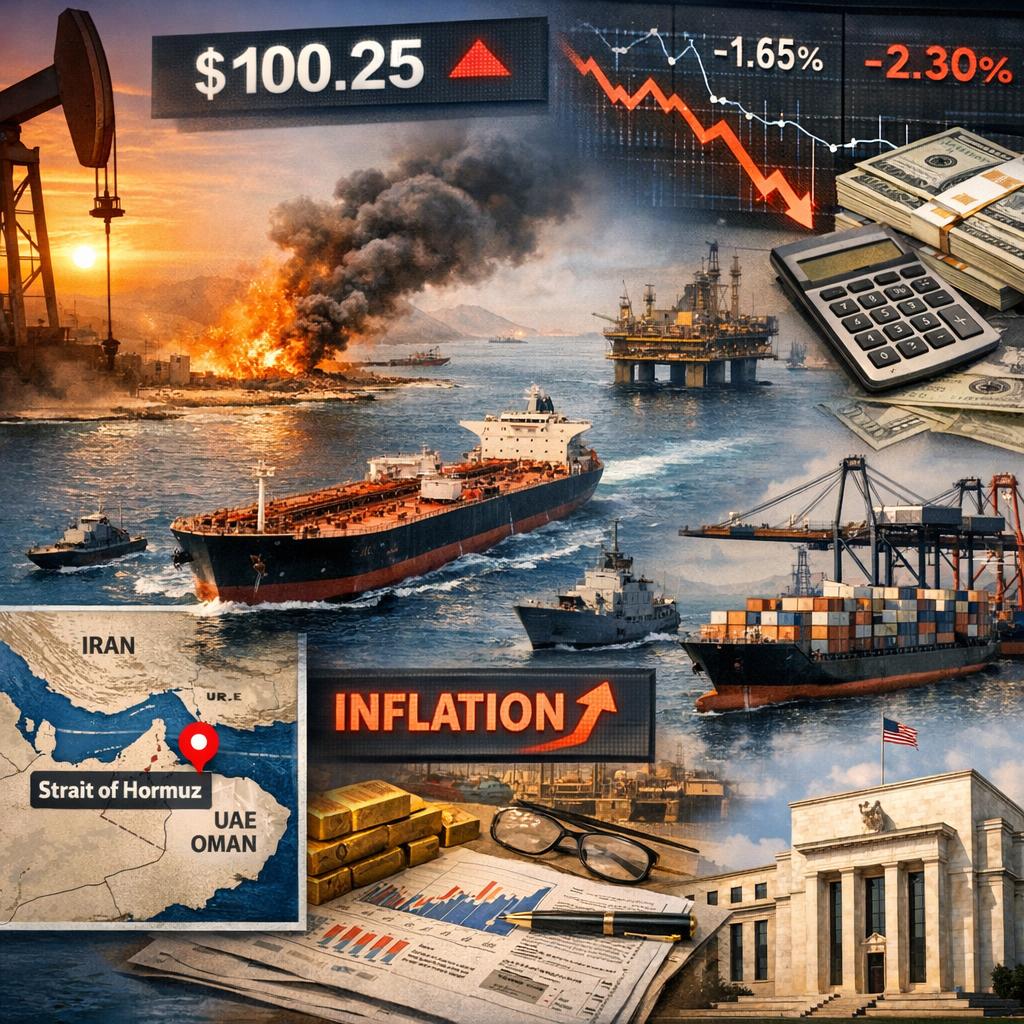
A lot of market narratives come and go, but a disruption in the Strait of Hormuz is one of the few that can reprice global assets in a matter of days. That’s why the recent reports of shipping still stalling — even with a ceasefire framework in the background — matter far beyond the Middle East. When fewer tankers pass through one of the world’s most critical energy chokepoints, you’re not just looking at “geopolitics.” You’re looking at a live input into inflation expectations, central bank reaction functions, corporate margins, and risk appetite.
Oil back above $100 isn’t simply an energy story
When oil pushes back through $100, markets tend to treat it as a number. But the real issue is what that number does downstream:
1) Inflation doesn’t need to surge everywhere to do damage
Energy is one of the fastest ways to reignite inflation psychology. Even if core inflation is behaving, a sharp move in fuel and transport costs can harden expectations. That matters because investors aren’t only trading today’s data — they’re trading the next policy meeting, the next set of forecasts, and the next shift in language from central banks.
2) Rates can stay “higher for longer” for all the wrong reasons
If oil is rising because growth is strong, that’s one regime. If oil is rising because supply routes are constrained and risk premia are jumping, that’s a different regime — one where growth can weaken while inflation stays sticky. Markets hate that mix. It complicates everything from equity multiples to credit spreads.
3) The shock travels through shipping, then through everything else
Stalling shipping isn’t an abstract logistics footnote. Freight, insurance, delivery times, and inventory buffers all get repriced. Companies with fragile supply chains or thin margins feel it first, but the knock-on effects can show up across consumer goods, industrial inputs, and even parts of tech hardware.
Why US oil exports matter in this setup
Alongside Hormuz constraints, the “race for supplies” dynamic changes trade flows quickly. If Asian tankers are increasingly heading for American ports, it reinforces two investor-relevant points:
– Energy becomes a strategic asset, not just a commodity position.
– Regional price gaps can widen, creating winners and losers across geographies.
In practical terms, that can support US energy producers and midstream infrastructure while pressuring energy-importing economies and industries that can’t pass through costs.
What this does to global portfolios (even if you don’t own oil stocks)
Even diversified investors end up exposed because energy is a macro lever:
Equities: Higher input costs squeeze margins, especially for transport, airlines, chemicals, and lower-pricing-power consumer names. Broad indices can wobble as analysts quietly mark down earnings or apply lower multiples due to uncertainty.
Credit: If the market starts thinking “sticky inflation,” you can see spreads widen in the weaker end of high yield, while refinancing assumptions get tougher. In risk-off moments, liquidity matters as much as fundamentals.
FX: Energy importers often see currency pressure as trade balances deteriorate. Meanwhile, energy exporters can get support — but only if the broader risk environment doesn’t overwhelm it.
Rates: Oil-driven inflation risk can push yields up at the front end (policy expectations) or steepen curves if markets price in a messy mix of inflation persistence and slower growth.
Volatility: This is where the “risk premium” becomes visible. Options get more expensive, correlations can jump, and hedges that looked unnecessary a month ago suddenly look cheap in hindsight.
How I’m thinking about positioning (without pretending anyone can predict the next headline)
This isn’t about panic-buying oil or turning your portfolio into a bunker. It’s about acknowledging that geopolitically-driven supply risk behaves differently than normal cyclical moves.
A few principles that tend to hold up in this kind of regime:
– Don’t confuse a ceasefire headline with normalized flows. Markets trade what’s happening in the pipes and ports, not what’s said at podiums.
– Stress-test for a second-round inflation impulse. If energy stays elevated, what breaks first in your portfolio: consumer exposure, duration, or credit?
– Know your “hidden energy sensitivity.” Many portfolios have indirect exposure through industrials, logistics-heavy businesses, emerging markets, or rate-sensitive growth equities.
– Treat liquidity as a feature. When uncertainty spikes, the ability to rebalance without friction becomes its own edge.
The bigger takeaway: risk premia are not static
When a chokepoint like Hormuz is under strain, markets don’t wait for perfect information. They embed a premium in crude, shipping, insurance, and ultimately in the discount rates applied across assets. If you’re an investor, the goal isn’t to become a geopolitical expert overnight — it’s to recognize when a narrative has graduated into a macro variable.
If you’re tracking this closely, I’d be interested to hear how you’re thinking about it: is this a short-lived spike that markets will fade, or the start of a higher-volatility energy regime that forces a broader repricing?