The Market Isn’t Waiting for the Fed Anymore — It’s Repricing the Path in Real Time
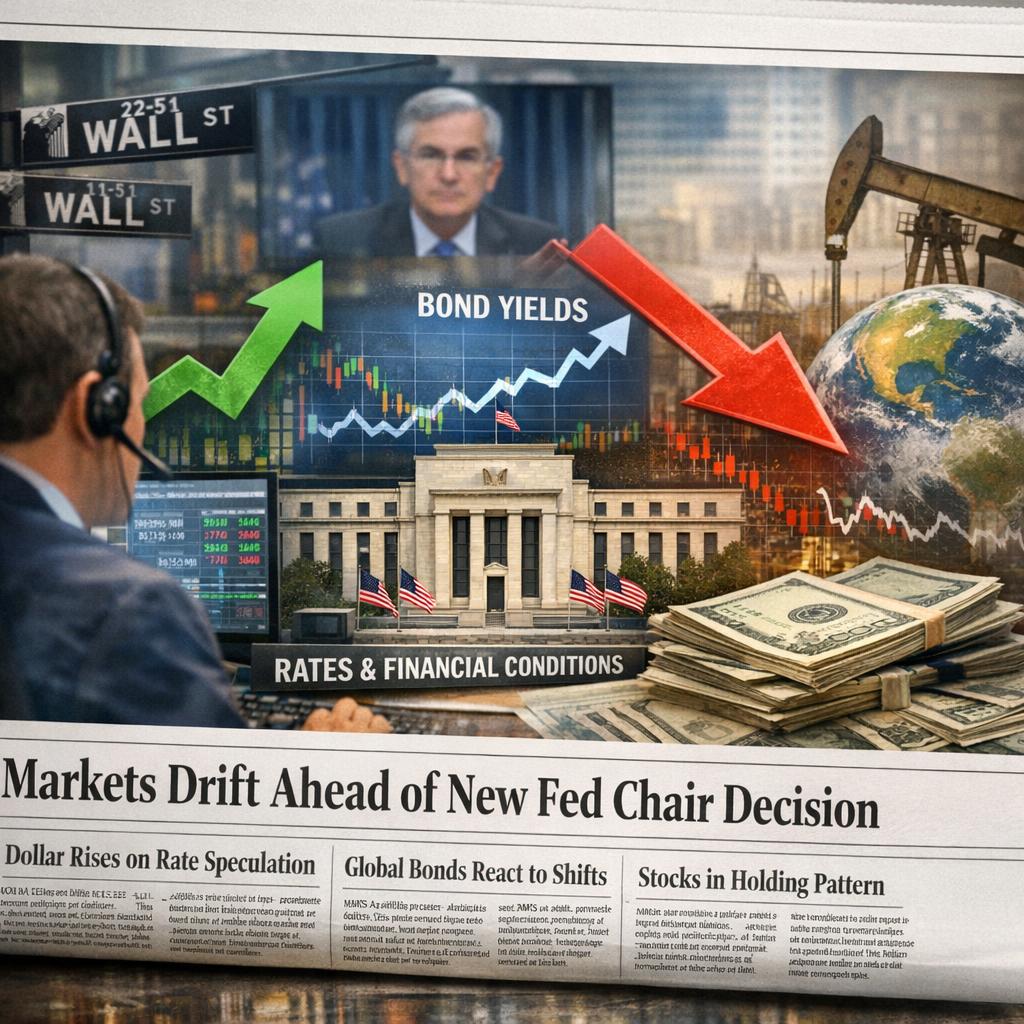
One of the most telling market stories right now isn’t a single earnings beat or a flashy product launch. It’s the quiet drift in major US indices ahead of the first policy meeting under the new Fed chair. When markets go from “reactive” to “pre-emptive,” that’s a signal worth paying attention to—especially if you invest globally.
Here’s what I’m watching, and why it matters far beyond the Dow or the S&P 500.
1) A new chair doesn’t just change tone — it changes assumptions
Every Fed chair inherits the same mandate, but the market trades the style.
Even before a single rate decision is made, investors begin to price in:
– How tolerant the Fed might be of sticky inflation
– How quickly it will respond to a growth slowdown
– Whether financial stability concerns (credit stress, liquidity issues, asset bubbles) will become a “third mandate” in practice
This is why you’ll often see markets drift, grind, or rotate into new leadership before the meeting even happens. It’s not that investors suddenly have new information—it’s that they’re recalibrating the reaction function.
And that reaction function is what sets the global price of money.
2) US rates are still the world’s anchor — even when you don’t own US assets
If you invest in UK or European equities, emerging markets, commodities, or even private credit, you’re still living downstream from US dollar funding conditions.
When the market starts repricing the future path of US rates, the ripple effects typically show up in a familiar sequence:
– The dollar moves first
– Global bond yields follow (especially in markets that rely on foreign capital)
– Risk assets react last, often through sector rotation rather than outright selling
That’s why a “boring” pre-Fed drift can matter more than a dramatic headline. It’s the plumbing changing pressure.
3) The real story is the gap between “rates” and “financial conditions”
A lot of investors focus on whether the Fed hikes, cuts, or holds. But markets often loosen or tighten financial conditions regardless of what the Fed does.
If equities remain resilient, credit spreads stay tight, and volatility remains contained, financial conditions can effectively ease—even if policy stays restrictive. That can:
– Extend risk rallies longer than fundamentals suggest
– Keep inflation pressures alive via demand and wealth effects
– Force the Fed to sound tougher than the market expects (even if it doesn’t act immediately)
On the flip side, if conditions tighten quickly (a stronger dollar, weaker credit, falling equities), the Fed can end up “doing less” even without cutting—because markets did the tightening for them.
This is the push-and-pull that global investors need to track: the Fed sets the policy rate, but the market sets the mood.
4) Portfolio implications: this is a positioning moment, not a prediction moment
I’m not convinced this kind of setup is best approached with big binary bets. It’s more about acknowledging regime risk and positioning so you’re not hostage to one outcome.
A few practical ways global investors often express this:
– Currency awareness: if you hold international assets, understand whether you’re implicitly long or short the dollar through your exposure
– Duration humility: long-dated bonds can swing sharply when the market re-prices the rate path, even without a policy move
– Quality over leverage: periods of policy transition tend to punish businesses (and investors) reliant on cheap refinancing
– Sector realism: if rates stay “higher for longer,” cash-flow timing matters—some growth stories are really just duration trades
None of this is about being bearish. It’s about being honest that a Fed transition is one of those moments when correlations can change quickly.
5) The global angle: the US meeting is everyone’s meeting
The US might be the one setting the policy rate, but the consequences are global:
– Emerging markets feel it via capital flows and dollar strength
– Europe feels it via bond market correlation and growth expectations
– Commodities feel it via the dollar and risk appetite
– Multinationals feel it via translation effects and financing costs
So even if you don’t own a single US stock, you’re still exposed to US monetary conditions—just through different channels.
If you’re investing right now, I’d treat this meeting less like a single “event risk” and more like a signpost for how the next quarter’s narrative gets written: inflation tolerance, growth protection, and the market’s willingness to believe in a soft landing.
If you’re watching this too, comment with what you think matters more in the next few months: the Fed’s words, the bond market’s reaction, or the dollar’s direction.