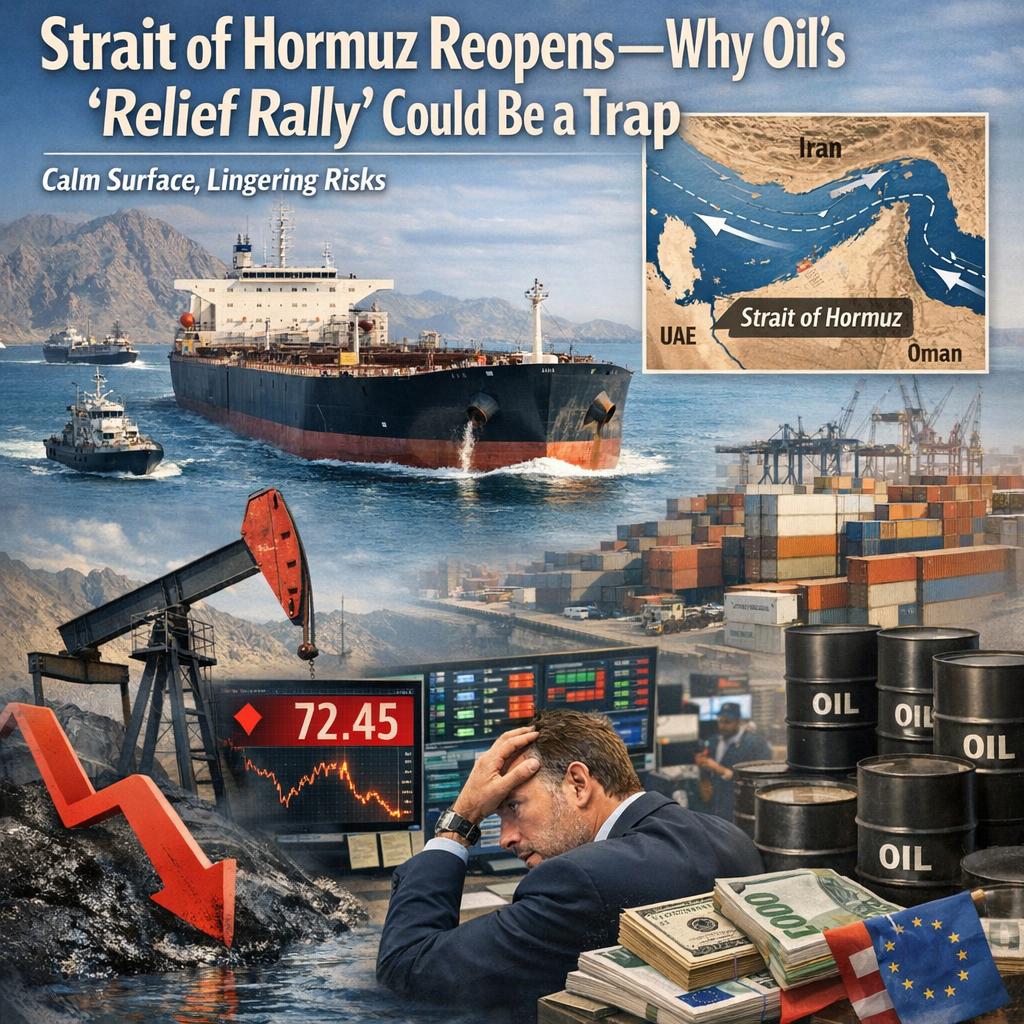
The Strait of Hormuz Reopened — and Why That “Relief Rally” in Oil Could Be a Trap for Global Investors
One of the more interesting market stories today isn’t about a company’s earnings beat or a flashy AI headline. It’s about plumbing. The Strait of Hormuz has reopened, and on the surface that sounds like the kind of headline that should calm everyone down: shipping lanes clear, risk premium fades, oil prices ease.
But this is one of those moments where “good news” can quietly set up the next bout of volatility.
Why reopening can pressure oil (and still raise risk)
When a key chokepoint reopens, two things can happen at once:
1) The fear bid comes out of crude
A disruption threat typically adds a geopolitical premium to oil prices. Once the path is open again, traders who bought protection unwind positions, and crude can drop quickly. That’s the easy part of the story.
2) Physical flows surge back in an uneven way
Reopening doesn’t mean the system returns to normal instantly. Shipping schedules, insurance costs, security protocols, and port congestion don’t snap back like a light switch. You can get a wave of deferred cargoes hitting the market at the same time, which can weigh on spot pricing even as underlying uncertainty remains.
That combination is what makes this kind of headline tricky for investors: oil can fall while risk stays elevated.
The market impact isn’t just “energy stocks up or down”
A move in crude reverberates through global portfolios in three underappreciated channels:
1) Inflation expectations and rate pricing
Lower oil can cool headline inflation prints, which markets often translate into a friendlier path for interest rates. That can lift duration-sensitive assets: long-dated government bonds, rate-sensitive equities, and parts of growth/tech.
But the bond market doesn’t just trade oil. It trades second-order effects: shipping costs, supply-chain reliability, and whether any renewed flare-up could reverse the move. If crude drops because a risk premium unwinds, and then pops again on a new incident, you get whipsaw in inflation expectations—and that’s when rate volatility returns. Investors globally feel that through everything from mortgage rates to EM capital flows.
2) Currency moves and the “importer vs exporter” split
Cheaper oil is not evenly “good” or “bad.” It redistributes stress.
Oil importers often get relief: better trade balances, less inflation pressure, more policy flexibility. Oil exporters can see fiscal expectations soften and currencies lose momentum. That dynamic matters if you hold broad international equity funds or EM debt—because you’re implicitly taking exposure to those macro linkages even if you think you’re “just diversified.”
3) Equity leadership shifts inside the same index
Even within US or global benchmarks, oil is a leadership lever. When crude sells off, energy can drag index performance, but it can also act like a tax cut for consumer-facing businesses and transport-heavy sectors. The catch is that markets don’t always reward “beneficiaries” immediately; sometimes they focus on earnings risk and balance sheets first.
In other words, oil down doesn’t automatically mean airlines up and consumer discretionary up. It depends on whether the market believes the decline is durable.
What I’m watching now (as an investor, not a headline-reader)
If the Strait reopening keeps crude contained, the near-term narrative may shift toward disinflation and “soft landing” comfort. That tends to support risk assets, tighten credit spreads, and pull capital back into higher-beta areas.
But if prices fall too sharply, that can signal demand anxiety—especially if other data points line up (freight, manufacturing, PMIs). Then the same oil drop gets reinterpreted as “growth scare,” and investors pivot from celebrating lower inflation to pricing lower earnings.
So the real tell isn’t just the direction of oil. It’s the reason the market decides oil is moving.
A simple framework for global portfolios
If you’re building or managing a diversified portfolio, this is the kind of event where it helps to be explicit about what role energy exposure plays:
– If energy is your inflation hedge, a pullback may reduce that protection at the exact moment complacency rises.
– If you’re underweight energy because you expect disinflation, a geopolitical-driven spike can still hurt you through broad index volatility and rate repricing.
– If you rely on dividends and cash flow stability, remember that energy equities can behave like a macro instrument in disguise when geopolitical headlines dominate.
None of this is a call to trade the news. It’s a reminder that the “reopening” headline is not an all-clear signal—it’s a transition point, and transitions are where markets misprice things most often.
If you’ve adjusted your portfolio’s energy exposure (up or down) over the past year, comment with the reasoning you used—was it inflation, geopolitics, valuation, or something else?