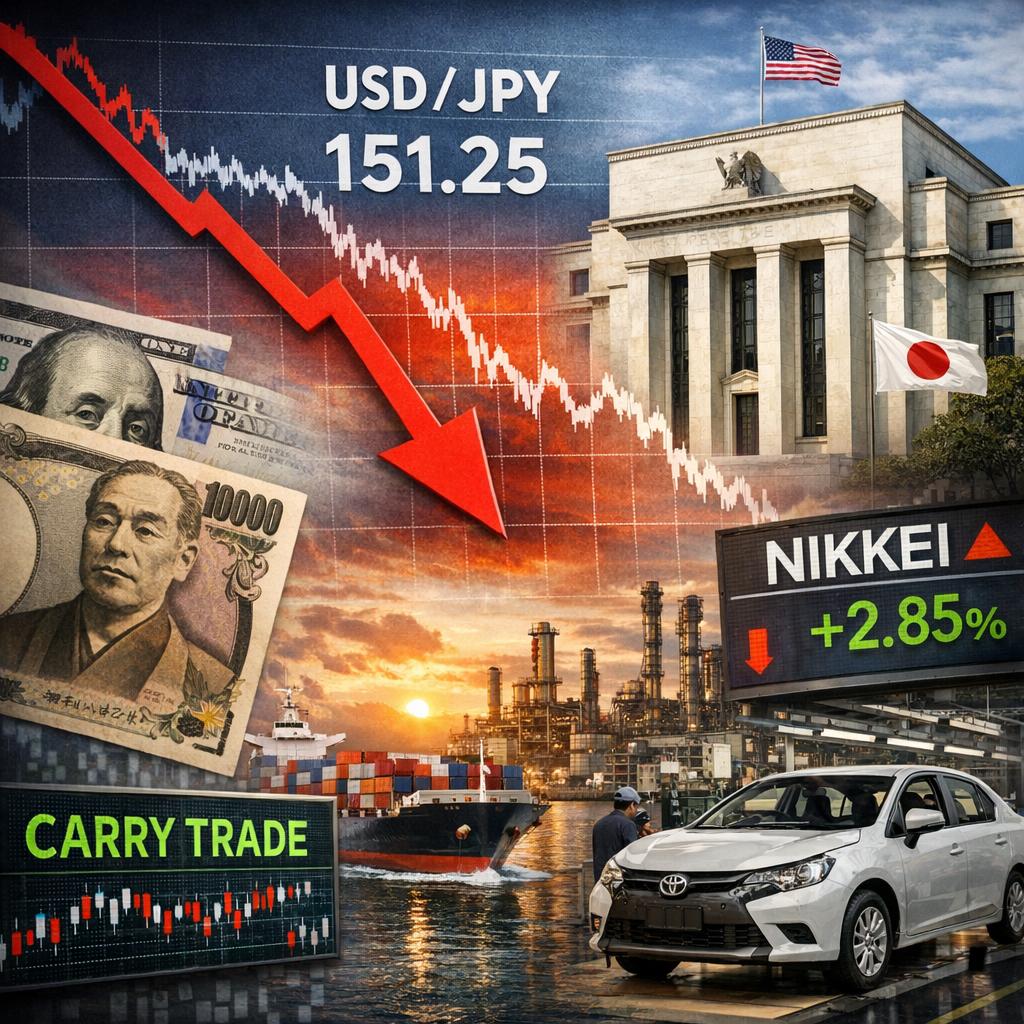
A quiet but persistent signal has been flashing across the financial landscape over the past few weeks, and it’s one that cuts through the noise of earnings calls and central bank commentary. It’s the story playing out in the currency markets, specifically in the steady, grinding pressure on the Japanese yen. While it lacks the cinematic drama of a tech stock moonshot, its implications are woven into the fabric of global capital flows, corporate profitability, and investment strategy in a way few other assets are.
The yen’s journey to multi-decade lows against the US dollar isn’t a sudden shock; it’s the culmination of a profound and deliberate policy divergence. On one side, you have the Bank of Japan, patiently maintaining its ultra-loose monetary policy, a legacy of its long battle against deflation. On the other, the Federal Reserve and other major central banks have spent the last two years in a forceful tightening cycle. This has created one of the most stark interest rate differentials in modern memory. Money, in its relentless search for yield, flows along this gradient. Investors borrow in cheap yen to purchase higher-yielding assets elsewhere—the classic carry trade—and this constant selling pressure weighs heavily on the currency.
For the global investor, this isn’t just a forex chart curiosity. It operates on multiple levels. Firstly, it directly impacts the returns of any international portfolio with Japanese holdings. A US-based investor who bought a Nikkei index fund a year ago would have seen their gains significantly amplified when converted back to dollars, purely due to the yen’s depreciation. Conversely, a Japanese investor looking abroad faces a more expensive world, potentially altering asset allocation decisions at a national level.
Secondly, and perhaps more subtly, it reshapes corporate competitive dynamics. A weaker yen is a tailwind for Japan’s export giants—the Toyotas and Sonys of the world—making their products more competitively priced in global markets. This can translate to stronger earnings, which equity markets have begun to price in. However, it’s a double-edged sword for a resource-poor nation, dramatically increasing the cost of imported energy and raw materials, squeezing households and import-reliant businesses. This internal tension—between buoyant exporters and a strained domestic economy—creates a complex picture for anyone analyzing Japanese equities.
But the ripple effects extend far beyond Japan’s shores. The yen has historically been a barometer for global risk appetite. Its strength in times of crisis, seen as a safe-haven flow, is being tested by this entrenched carry trade dynamic. Now, a sudden market tremor might not produce the predictable yen surge it once did, potentially altering the hedging playbook for multi-national funds. Furthermore, the persistence of such a weak yen forces responses from regional neighbors. Export competitors in South Korea and Southeast Asia face pressure, potentially leading to heightened currency volatility or even interventionist rhetoric across Asia, a region critical to global supply chains.
The most intriguing question for markets now is one of sustainability and tipping points. The BOJ faces a precarious balancing act. Allowing the yen to weaken too far risks importing destabilizing inflation and public discontent. Intervening to support the currency, however, would mean confronting the market’s powerful yield-seeking logic and could destabilize the government bond market they’ve worked so long to calm. Every subtle shift in their rhetoric is now parsed for hints of a policy pivot, with the potential to trigger violent reversals in the yen and send shockwaves through crowded financial positions built on its continued weakness.
For investors, the lesson here is in the connective tissue of global finance. A monetary policy decision in Tokyo reverberates in the cost of capital in emerging markets, the profit margins of European automakers, and the volatility profiles of global hedge funds. It’s a potent reminder that in an interconnected world, there are no purely local stories. The yen’s path forward—whether it continues its controlled descent or finds a sudden floor—will be a key variable in the global investment equation for the quarters ahead, demanding attention not just from currency traders, but from anyone with a stake in the cross-border movement of capital and goods.
I’m keen to hear how others are positioning for this dynamic. Feel free to share your own take in the comments.