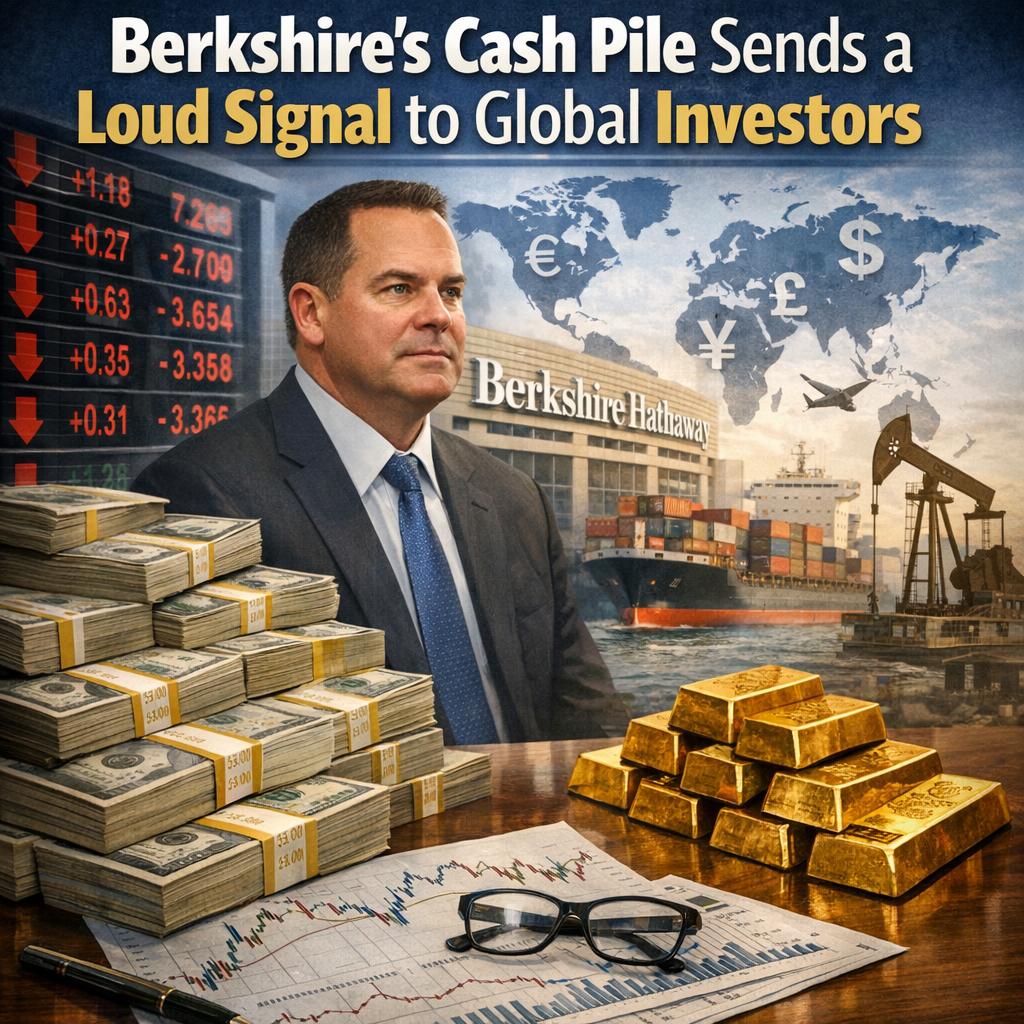
Berkshire’s Cash Pile Just Sent a Loud (and Useful) Signal to Global Investors
One headline that stood out to me this week wasn’t about a flashy product launch or a sudden macro shock. It was quietly telling: Berkshire Hathaway’s cash position surged in Greg Abel’s first quarter as CEO.
On the surface, that can read like a conservative footnote. In practice, it’s one of the clearest “positioning” signals we get from the most watched capital allocator in the market. And because Berkshire sits at the intersection of insurance, equities, and real-economy businesses, the implications ripple far beyond the US.
Why a bigger cash pile matters (even if you don’t own Berkshire)
Berkshire’s cash isn’t idle in the way most people think about cash. It’s a strategic asset. It provides:
1) Optionality when prices reset
When markets sell off, the best opportunities tend to appear fast and look uncomfortable in real time. Having liquidity ready isn’t just defensive; it’s offensive. The firms that can buy when others are forced to sell tend to lock in the best long-term returns.
2) Protection against “tail risk” in the real economy
Berkshire’s DNA is insurance, and insurance is a business built around preparing for the unexpected. A larger cash buffer often signals a preference for resilience over reaching for marginal upside. If a group with that much market access is prioritising resilience, it’s worth paying attention.
3) A higher bar for valuations
When patient capital chooses to sit on its hands, that can be read as: “I’m not seeing enough mispricing yet.” Not “stocks are doomed” — just that the reward may not justify the risk at current levels.
The global angle: this isn’t just a US story
Even though Berkshire is a US-based conglomerate, its behaviour is a useful compass for global investors because it reflects a broader reality: liquidity is becoming a competitive advantage again.
In an environment where rate expectations can shift quickly, geopolitics can reprice supply chains overnight, and equity leadership can rotate in a matter of weeks, cash becomes more than a parking place. It becomes the ability to move decisively.
International investors feel this in a few ways:
Currency sensitivity: When risk appetite wobbles, capital flows don’t just move between stocks and bonds — they move between countries. A more cautious posture from major US allocators can amplify USD strength or volatility, which then feeds into returns for anyone holding unhedged global assets.
Cross-asset knock-ons: If big pools of capital are less eager to chase equities, you can see stronger demand for high-quality fixed income and short-duration instruments. That changes the relative appeal of dividend equities, growth stocks, and even private assets worldwide.
Pressure on “priced for perfection” sectors: When liquidity is valued, the market tends to get less forgiving. Companies with long-dated cash flows (and narratives doing a lot of the work) often feel it first.
What I take from this as an investor
I don’t read a cash surge like this as a call to panic, or a prediction that a crash is imminent. I read it as a reminder of what wins across cycles:
Don’t confuse a strong market with a forgiving one.
When liquidity is prized, mistakes get punished faster.
Treat cash as a position, not a failure.
A little dry powder can be the difference between watching opportunities and actually being able to act on them.
Raise your standards.
If the best-known patient allocator is comfortable waiting, it’s a nudge to be more selective with entries, valuation discipline, and risk concentration.
The bigger point: discipline is back in style
For years, the market rewarded speed, leverage, and “always be invested.” When cash builds at Berkshire, it’s a counterweight to that mindset. It says: the ability to wait is still a superpower — and in uncertain conditions, it might be the one that matters most.
If you’re watching markets right now, I’d be interested to hear your take: is this a simple by-product of deal flow and timing, or a deliberate statement about opportunity (or lack of it) at current prices? Comment if you have a view.