Exxon and Chevron Saying “No” to the White House Is Bigger Than Oil — It’s a Blueprint for How Markets Really Work
One of the easiest mistakes investors make is assuming that when politicians apply pressure, corporate strategy automatically follows. This week’s push-and-pull between the White House and America’s two largest oil companies is a clean reminder that public markets don’t run on headlines — they run on incentives, capital discipline, and credibility.
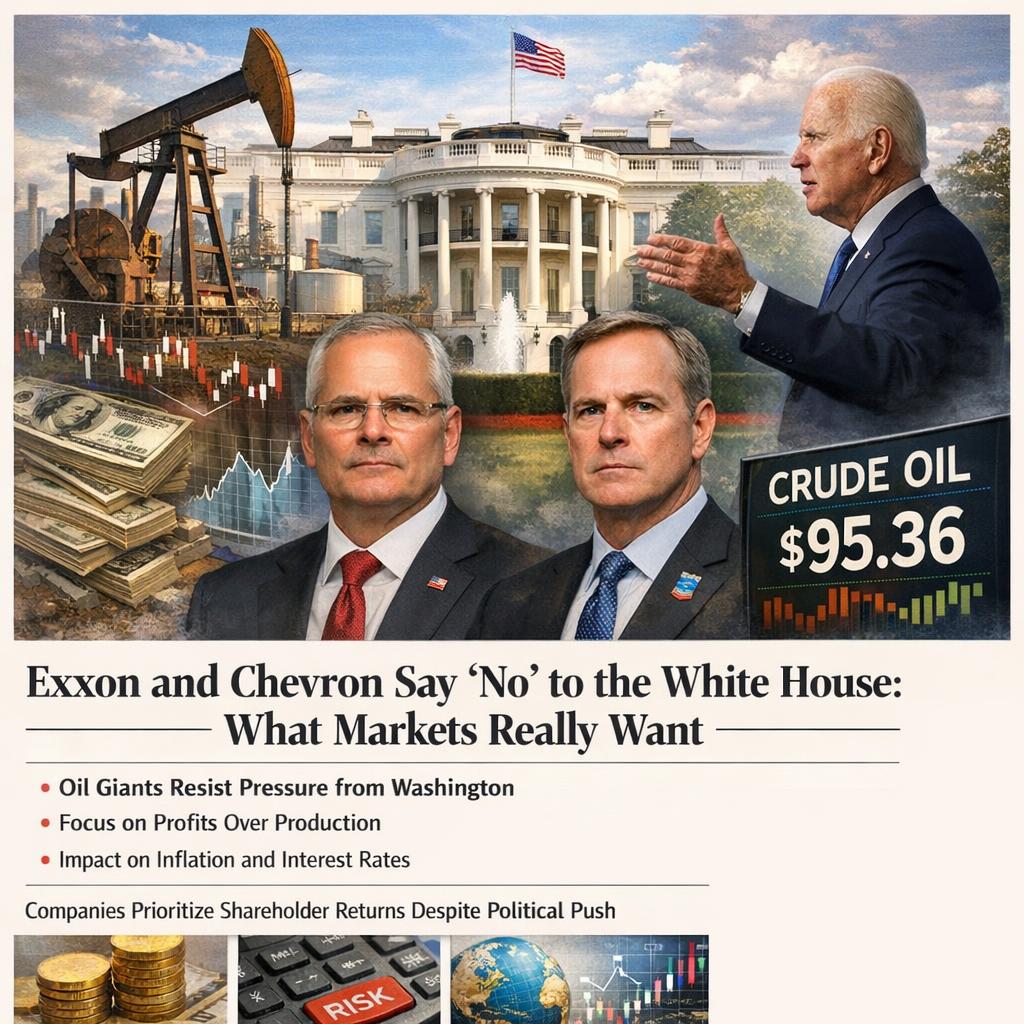
The story, in plain terms: Exxon and Chevron have resisted calls to rapidly boost oil production to help bring down petrol prices. Instead, they’re sticking to the “prewar” playbook: measured spending, controlled growth, and prioritising returns.
That might sound like boring corporate governance. For global investors, it’s anything but.
1) The era of “drill at any cost” is still not coming back
For years, US shale was the world’s swing producer — the responsive supply that could surge when prices rose. But the scars of the last cycle remain.
Energy companies remember what happened when they chased volume:
– Costs inflated.
– Balance sheets got stretched.
– Shareholders got diluted.
– And when prices fell, equity investors paid the price.
Today’s energy executives are effectively saying: we’d rather protect free cash flow and distributions than gamble on a politically convenient supply surge.
If you’re an investor, that signals something important: even if oil prices rise, supply may not respond as quickly as it once did. That changes how you think about volatility, inflation sensitivity, and the durability of energy profits.
2) “Capital discipline” is now part of the equity risk premium
Investors often talk about the equity risk premium in abstract terms. In energy, it’s become very tangible: you’re not just buying exposure to oil prices — you’re buying exposure to management’s willingness to not blow up the cycle.
The market has rewarded oil majors for behaving less like growth companies and more like cash machines:
– steady buybacks
– dividends that feel “protected”
– fewer empire-building projects
So when Exxon and Chevron ignore pressure to spend more aggressively, it can actually be supportive for their valuations. Not because politicians don’t matter, but because shareholders increasingly set the terms: “Don’t destroy returns to win a short-term PR battle.”
3) This has global consequences for inflation and central banks
If the biggest US producers are reluctant to open the taps quickly, it matters far beyond the S&P 500 energy sector.
Energy prices feed into:
– transport costs
– food supply chains
– household inflation expectations
– and ultimately, central bank reaction functions
For investors in the UK, Europe, and emerging markets, sticky energy can mean:
– a slower path to rate cuts
– tighter financial conditions lasting longer
– more pressure on consumer-sensitive sectors
– and renewed strength in “real asset” narratives (commodities, infrastructure, certain value equities)
In other words, oil supply discipline in Texas can echo through bond yields in London and currency pressure in places that import energy.
4) It’s also a subtle political risk signal for US equities
There’s another layer here that doesn’t get priced cleanly until it suddenly does: political risk.
When a government publicly pushes companies to behave a certain way — and the companies publicly don’t — you get a reminder that:
– regulation can tighten
– taxes/windfall measures can reappear
– permits and approvals can become bargaining chips
– and the policy environment can get more unpredictable
Even if none of that happens immediately, investors should understand the direction of travel: energy remains politically sensitive, and that means the discount rate you apply to future cash flows should include some policy uncertainty.
So what should investors do with this?
This isn’t a call to buy or sell Exxon or Chevron on a single storyline. It’s a macro signal.
It says:
– supply may stay tighter than many assume
– energy volatility may remain a feature, not a bug
– inflation hedges still have a seat at the table
– and “shareholder-first” capital allocation is shaping the whole sector
In portfolios, that tends to reward balance:
– not being underexposed to energy/commodities if inflation returns
– not overexposed to long-duration assets that suffer when rates stay higher for longer
– and being careful about assuming governments can simply “order” markets into lower prices
If you’re watching this story, I’d love to hear your take in the comments: do you think the majors are right to prioritise discipline, or do you expect political pressure to eventually force a shift?