Visa, Mastercard, and the Stablecoin “Middle Layer”: What a Joint Launch Could Mean for Global Investors
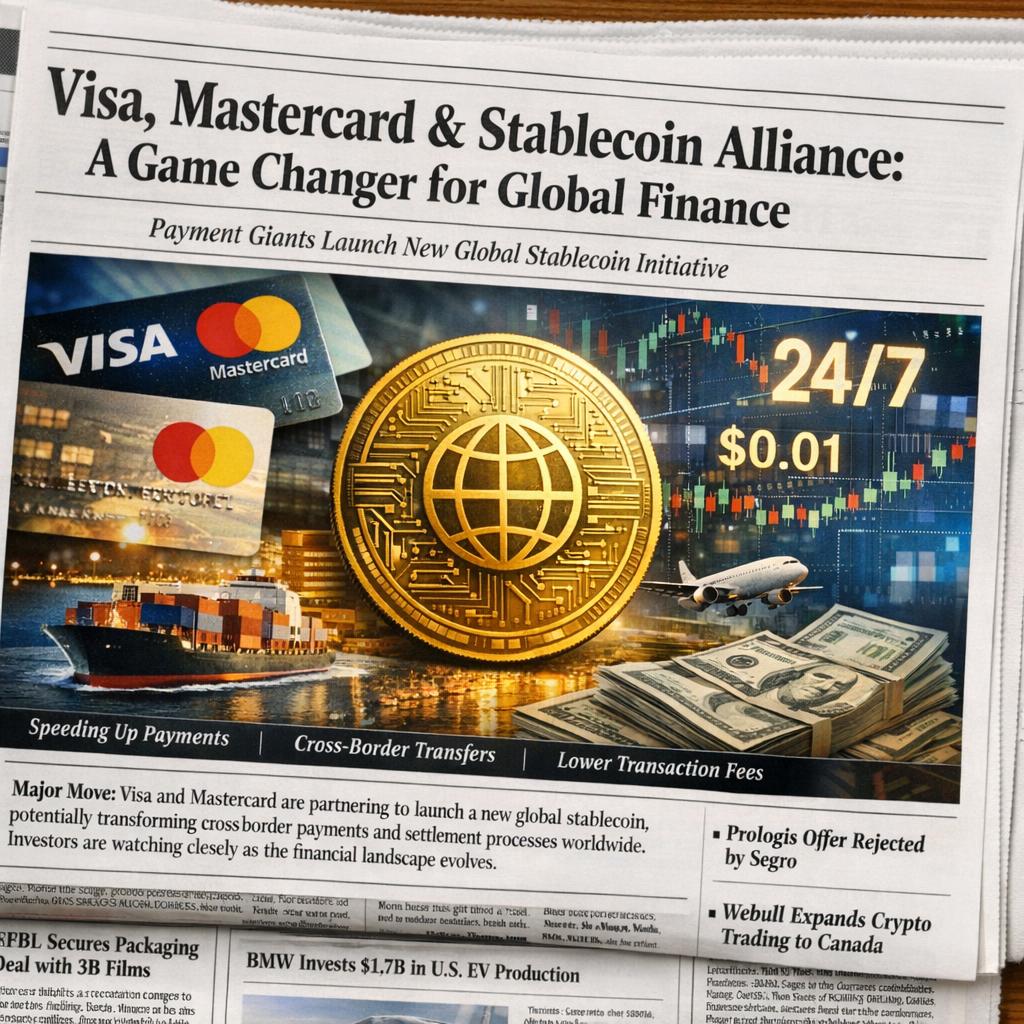
One of the more consequential stories in markets right now isn’t a headline-grabbing IPO or a surprise rate cut. It’s the report that a consortium including Visa and Mastercard has jointly launched a new global stablecoin. On the surface, that can sound like “just another crypto product.” In reality, it’s a signal that the plumbing of money is still being rebuilt in real time—and investors shouldn’t ignore what that could do to payments, banking margins, cross-border flows, and even the competitive moat around the biggest card networks.
Stablecoins are growing up (whether you like them or not)
Stablecoins have always sat in an awkward position: widely used in crypto markets, increasingly used in cross-border settlement, but still viewed by many traditional investors as a regulatory grey zone or a speculative sideshow.
When payment incumbents move from “watching” to “building,” the story changes. Visa and Mastercard aren’t early adopters chasing hype. They’re distribution, trust, merchant acceptance, risk controls, and global compliance infrastructure. If they’re involved, the aim is less about memes and more about making a stablecoin behave like a utility.
The investment implication: stablecoins are shifting from a niche trading tool toward a mainstream settlement rail.
The real battleground is fees and settlement speed
For decades, the payments business has been a toll road. Card networks don’t take credit risk like banks do, but they sit at a high-volume intersection and collect fees for routing, authentication, and settlement. That model has been extraordinarily resilient.
Stablecoins threaten one part of that stack: settlement. If money can move globally in near real time, with finality, 24/7, and at lower cost, then the “why does this take days?” question becomes harder for customers and merchants to accept.
Now, that doesn’t automatically mean Visa and Mastercard lose. In fact, a joint launch suggests they’d rather cannibalise parts of the value chain themselves than let an outsider do it. The most realistic outcome is not a sudden collapse of card rails, but a gradual re-pricing of certain payment flows:
1) Cross-border transfers and remittances are most exposed.
These are historically expensive and slow, which makes them the easiest target for a stablecoin-based alternative.
2) Large-ticket B2B payments could migrate faster than consumers.
Businesses care deeply about liquidity, reconciliation, and working capital timing. Faster settlement isn’t just “convenient,” it’s balance-sheet relevant.
3) Consumer payments may change last.
Consumers don’t wake up craving a new settlement mechanism; they want rewards, fraud protection, and convenience. That’s where incumbents can keep their edge—if they integrate the new rails without breaking the user experience.
If you’re investing globally, watch for the winners and losers to show up not only in “crypto names,” but across payments processors, banks with fee-heavy cross-border franchises, and even ERP/fintech platforms that sit between businesses and money movement.
A stablecoin from incumbents is also a regulatory bet
Stablecoins aren’t just technology; they’re politics and compliance. Reserve composition, transparency, redemption rights, AML/KYC standards, and jurisdictional oversight will matter as much as code.
A consortium led by major payment brands likely aims to do three things:
– Make the reserve story palatable to regulators and institutions
– Reduce counterparty fear for merchants and corporate treasurers
– Build a standard that can scale without triggering a regulatory backlash
For investors, this is where the second-order effects start to matter. If a “regulated-friendly” stablecoin becomes the default for certain flows, then some existing stablecoins could face pressure on market share, while custodians, compliance tech providers, and settlement infrastructure firms could see tailwinds.
The FX angle: friction reduction changes behaviour
A point that gets missed: stablecoins can reduce friction, but that also changes how people behave with money across borders.
When cross-border transfers are cheap and instant:
– Individuals may hold value in different currencies more frequently
– Small businesses may source globally with fewer cashflow penalties
– Platforms may price services in new ways, reducing reliance on legacy correspondent banking routes
That doesn’t mean FX markets become irrelevant—far from it. But it can shift volume toward the “on/off ramps,” liquidity providers, and treasury tools that make stablecoin settlement usable at scale.
So what should investors actually do with this?
No, this doesn’t mean “buy anything with blockchain in the pitch deck.” The smarter takeaway is to reassess the durability of certain fee pools and moats:
1) Payments networks: moat evolves, not disappears
If Visa/Mastercard help define the stablecoin settlement layer, they may defend their role as the trusted routing and risk-management layer—even if settlement becomes cheaper.
2) Banks: watch international fee dependence
Banks with heavy exposure to cross-border fees and slow settlement franchises may face margin pressure, while those that adapt (or partner) could gain volume and relevance.
3) Fintech and infrastructure: the picks-and-shovels matter
Compliance, identity, fraud prevention, custody, reconciliation, and treasury tooling become even more valuable when money moves faster and never sleeps.
4) Crypto markets: maturity is a double-edged sword
Mainstream adoption can lift the whole ecosystem, but it can also compress returns in the most obvious “beta” trades as the space becomes more utility-like and regulated.
The bigger picture: this is about who owns the future of money movement
If you strip away the noise, a stablecoin backed by major payment incumbents is a move to own the “middle layer” of global commerce: the settlement standard that businesses, platforms, and consumers use without thinking about it.
And in markets, the most powerful businesses are often the ones you don’t notice—because they’re embedded into everyday transactions.
Curious how you’re viewing this: is this a defensive move by the card networks, or the start of a new growth chapter for them? Share your take in the comments.