The Strait of Hormuz Risk Is Back on the Screen — and Investors Should Treat It Like a Portfolio Stress Test
One of the most market-relevant stories in the latest Financial Times batch is the escalation around the Strait of Hormuz: President Trump’s reported 48-hour ultimatum tied to opening the waterway, and Iran’s response signalling a shift from “defensive to offensive” strategy, including threats against “vital” infrastructure and potential closure of Hormuz.
For investors, this isn’t just geopolitics. It’s a live stress test for three things markets tend to take for granted when volatility is low:
1) energy flow reliability,
2) shipping and insurance friction,
3) the fragility of “just-in-time” global supply chains.
Here’s how I’m thinking about it.
1) Oil isn’t the only price that matters — it’s the volatility and the risk premium
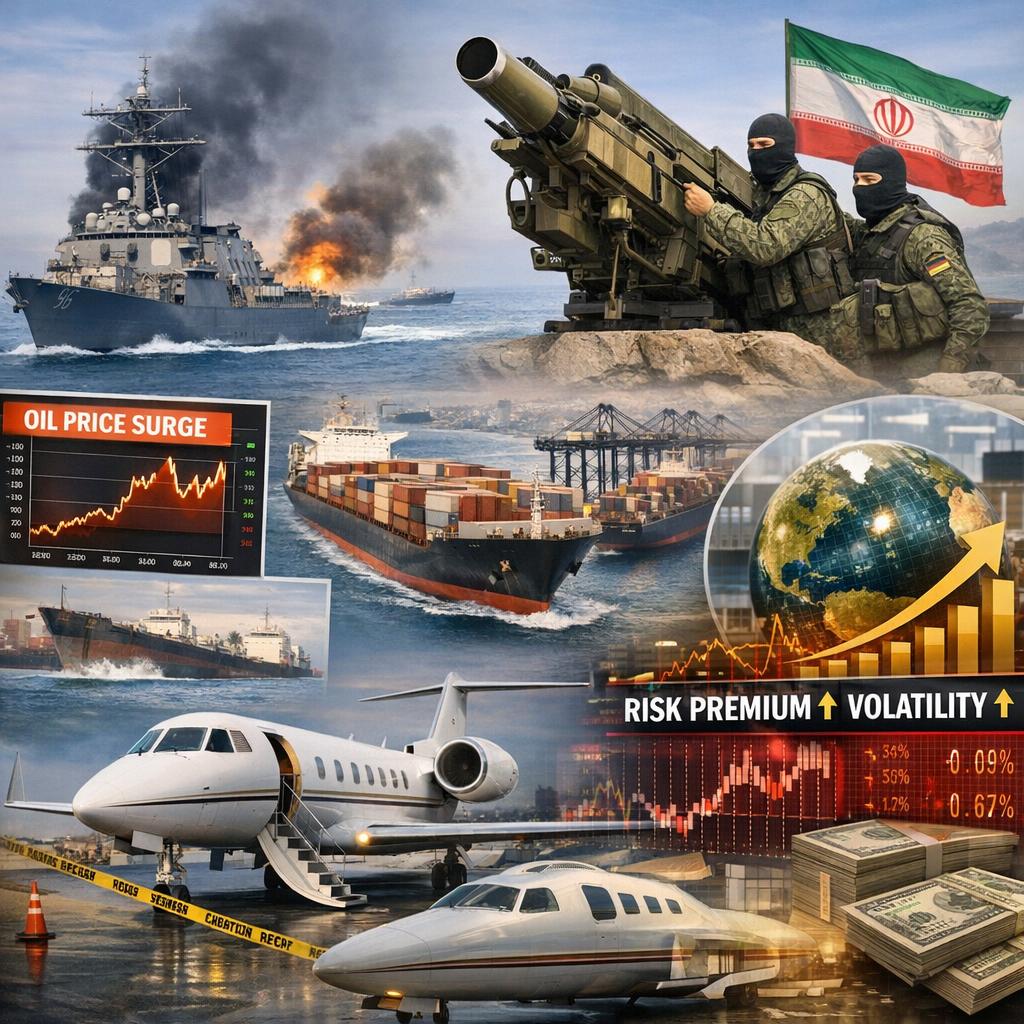
When Hormuz becomes a headline, crude can gap higher quickly. But the bigger tell is often the risk premium: how much buyers are willing to pay for near-term barrels, and how aggressively options get repriced. Even if spot prices don’t explode, a jump in implied volatility changes behaviour across portfolios.
Why it matters:
– Higher energy volatility feeds directly into inflation expectations.
– Inflation expectations feed into bond yields, central bank rhetoric, and equity valuation multiples.
– This can tighten financial conditions even without an outright recession.
If you’re watching markets this week, don’t just look at the oil price. Watch the shape of the curve, volatility pricing, and what credit spreads do alongside it.
2) Shipping is where “invisible” costs become very visible, very fast
Another FT angle in the same context hits the practical side: “war risk” insurance surging (even private jet operators are reportedly facing steep costs to land in the Gulf). That’s a niche example, but it speaks to a wider mechanism: conflict risk gets monetised through insurance, rerouting, delays, and higher financing costs for cargo.
This is one of those channels that can look small day-to-day, then suddenly show up in earnings calls:
– longer lead times,
– higher input costs,
– inventory management issues,
– margin pressure in sectors that can’t pass costs on quickly.
In plain terms: geopolitics doesn’t have to “stop” global trade to damage profitability. It only has to make trade more expensive and less predictable.
3) The AI and semiconductors angle is more fragile than most people assume
One of the more underrated links in the CSV is the idea that an Iran war could derail parts of the AI boom because the chip supply chain depends on steady access to energy and chemical inputs moving through or sourced from the region.
Investors often treat “AI” as a software narrative with hardware as a solved problem. It isn’t. The physical stack still matters:
– energy-intensive fabrication,
– specialty chemicals,
– shipping reliability,
– stable industrial logistics.
If energy costs spike or shipping lanes become unreliable, the “capex cycle” story can wobble. Not necessarily collapse — but get repriced, especially in the parts of the market trading on perfect execution.
4) Central banks in import-dependent economies get put in a box
The nomination of a new Bank of Korea governor amid won weakness and an oil price shock is a reminder of how quickly energy-driven stress becomes a currency-and-rates problem.
For countries that import most of their energy:
– higher oil and gas prices can worsen trade balances,
– weaker currencies can import more inflation,
– central banks can be forced to sound hawkish even when growth is slowing.
That combination tends to hit domestic equities, rate-sensitive sectors, and consumer purchasing power. Global investors then demand a higher risk premium, particularly where external financing needs are large.
5) What this means for global investors: it’s a correlation event waiting to happen
The biggest portfolio risk in moments like this isn’t any single position — it’s correlation. In a true risk-off move:
– equities can fall together,
– long-duration assets can wobble if inflation expectations jump,
– EM FX and credit can reprice quickly,
– “diversifiers” don’t always diversify the way the backtest promised.
The practical implication is that portfolio construction matters more than prediction. You don’t need to know exactly what happens in 48 hours to recognise what kind of tape this can produce: gaps, fast repricing, and crowded positioning getting punished.
A simple way to frame it: treat Hormuz headlines as a drill. If volatility doubles for a month, do you still like your exposures?
6) Sectors to watch (not as advice, just as a map of sensitivity)
Typically most sensitive:
– Airlines and transport (fuel + demand confidence)
– Chemicals and industrials with energy-heavy inputs
– EM assets with current account vulnerability
– Consumer sectors where energy acts like a tax
Potential beneficiaries (context-dependent):
– Energy producers and some services
– Defence-related names (with wide dispersion)
– Select shipping/logistics firms (but only if they can price power through disruption)
And then there are the second-order effects: higher yields, a stronger dollar in risk-off conditions, and multiple compression in growth names if inflation fears return.
Where I land on it
The market tends to underprice “tail risk” until the tail starts wagging the dog. A threatened chokepoint like Hormuz is one of the few catalysts that can jump from headline to macro variable quickly.
If you’re invested globally, this is the week to pay attention to what your portfolio is implicitly assuming about energy, shipping reliability, and inflation staying tame.
If you’re watching this closely too, share what you’re focusing on: oil volatility, credit spreads, FX, defence, semis, or something else entirely.