The IEA Just Put a Timestamp on the Worst-Case Energy Scenario — Investors Should Pay Attention
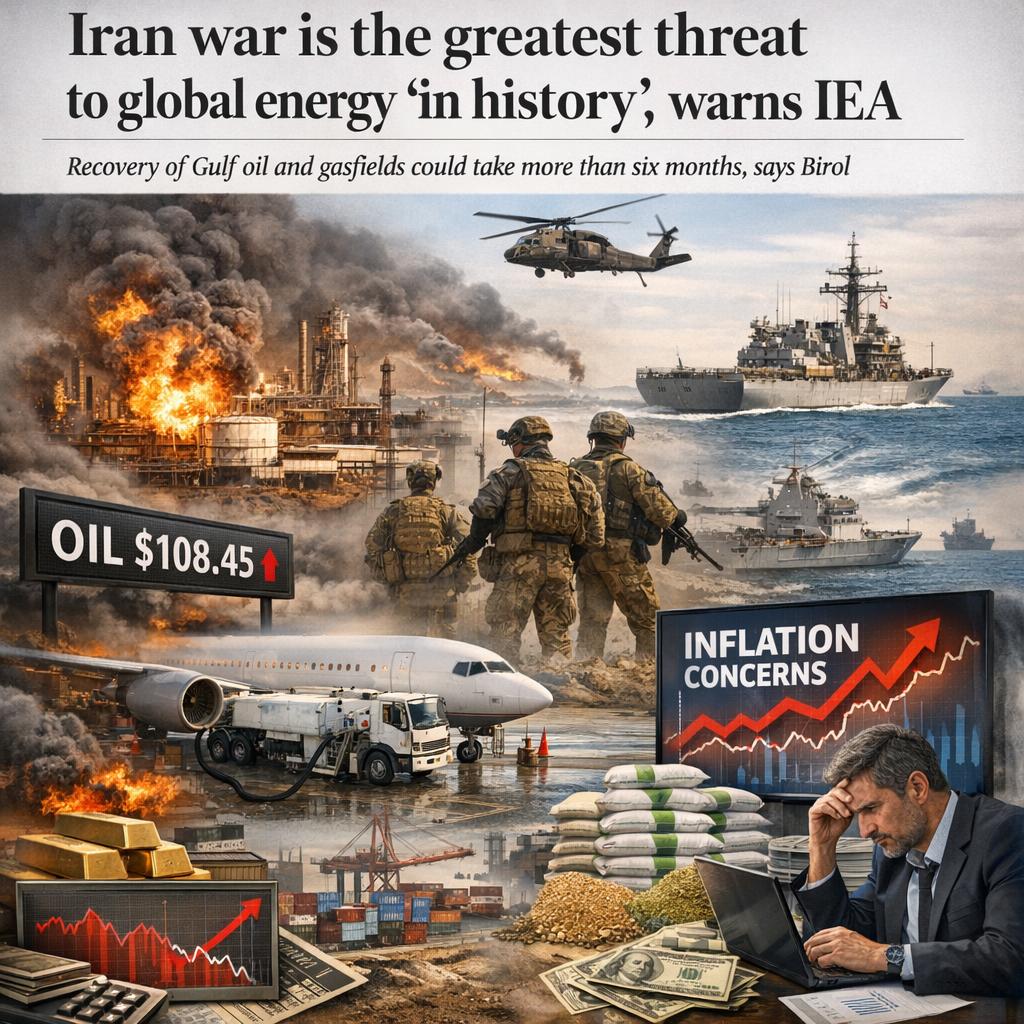
One line from the Financial Times stopped me in my tracks this week: the IEA warning that an Iran war could be the greatest threat to global energy “in history”, with the agency’s head, Fatih Birol, adding that recovery of oil and gasfields in the Gulf could take more than six months.
That “more than six months” detail is doing a lot of work. Markets can absorb shocks. What they struggle with is impaired supply that becomes operational reality, then lingers long enough to reshape inflation, growth expectations, and policy decisions across multiple regions.
This isn’t just an oil story. It’s a cross-asset story.
1) The market isn’t only pricing the barrel — it’s pricing the duration
When investors hear “geopolitical risk”, the first instinct is usually a quick spike in crude followed by a fade if nothing escalates. But the IEA’s framing shifts the focus from “headline volatility” to “infrastructure damage and repair timelines”.
A six-month-plus recovery window implies:
– persistent tightness in physical energy markets
– higher insurance, shipping, and security costs embedded into delivered energy prices
– longer-lasting second-order impacts (jet fuel, petrochemicals, fertiliser, logistics)
And that’s before we even get into behavioural effects: companies hoarding inventory, governments tapping strategic reserves, and buyers paying up for reliability over price.
In other words, this is less “oil pops on fear” and more “energy becomes a tax on the global economy for a while”.
2) Inflation doesn’t need to re-accelerate everywhere — it just needs to stop falling
Investors often treat inflation as a single global number. In practice, inflation is a patchwork, and energy is one of the fastest ways to re-stitch that patchwork into something uncomfortable.
A sustained energy shock can:
– slow disinflation in the US and Europe
– complicate the inflation outlook in energy-importing emerging markets
– squeeze consumers even if wage growth is moderating
– keep services inflation sticky via transport, utilities, and input costs
This matters because rate paths are narratives. If inflation stops improving, central banks don’t need to hike again to change market pricing — they can simply stay restrictive for longer than equities and credit would like.
So the risk isn’t only “higher oil”. It’s “less certainty on cuts”.
3) Equity leadership can change quietly, then all at once
When energy becomes a macro constraint, the market tends to rotate in ways that look obvious in hindsight:
– energy producers and some commodity-linked names get repriced as cashflow durability improves
– airlines, transport, and energy-intensive manufacturers face margin pressure and revised guidance
– consumer discretionary can soften as household budgets take a hit
– parts of tech can stay resilient, but the multiple becomes more sensitive to real yields and policy expectations
What’s tricky is the timing. Equity indices can look fine while leadership underneath shifts. That’s often where investors get blindsided: the headline market is stable, but breadth deteriorates and the winners narrow.
4) Credit is where “six months” starts to bite
In credit markets, the biggest question is rarely “who benefits?” and more “who can’t absorb this?”
If energy costs stay elevated:
– weaker balance sheets with high input sensitivity are exposed
– refinancing becomes harder for marginal borrowers
– default expectations can creep up even without a recession headline
This is also where “tail risks” become very real. When a shock threatens cashflows across a supply chain, insurers, lenders, and counterparties all adjust terms at the same time. The result is a tightening of financial conditions that doesn’t require a central bank meeting.
5) FX and geopolitics: the dollar smile meets the energy pinch
A prolonged Gulf energy disruption tends to support a more defensive global posture. Typically that can mean:
– safe-haven flows into USD and other defensive currencies
– pressure on energy-importing countries’ trade balances and FX
– stronger terms of trade for major energy exporters (though political risk can complicate that)
For global investors, this is a reminder that currency exposure isn’t just a hedge decision — it can become a return driver when macro stress rises.
What this means for portfolio reality (not just the headlines)
If the IEA’s warning proves even partially right, the investor challenge becomes balancing two uncomfortable truths:
1) energy shocks can lift certain sectors and commodities
2) the same shock can weigh on growth and complicate rate cuts, which is usually a headwind for broad risk assets
This is where diversification stops being a slogan and becomes the only practical tool:
– understanding where your portfolio is implicitly short energy (many are, without realising it)
– knowing which holdings are margin-sensitive vs pricing-power resilient
– being honest about duration risk (how exposed you are to higher-for-longer rate scenarios)
– stress-testing for “sticky inflation + slower growth” rather than assuming one or the other
None of this requires panic trading. It does require clarity: if the shock has duration, the market regime can change.
If you’re watching this closely, share what you think markets are underpricing right now: the duration of the disruption, the inflation impact, or the knock-on effect on rate expectations.