The Strait of Hormuz Risk Premium Is Back — And It Travels Faster Than Oil
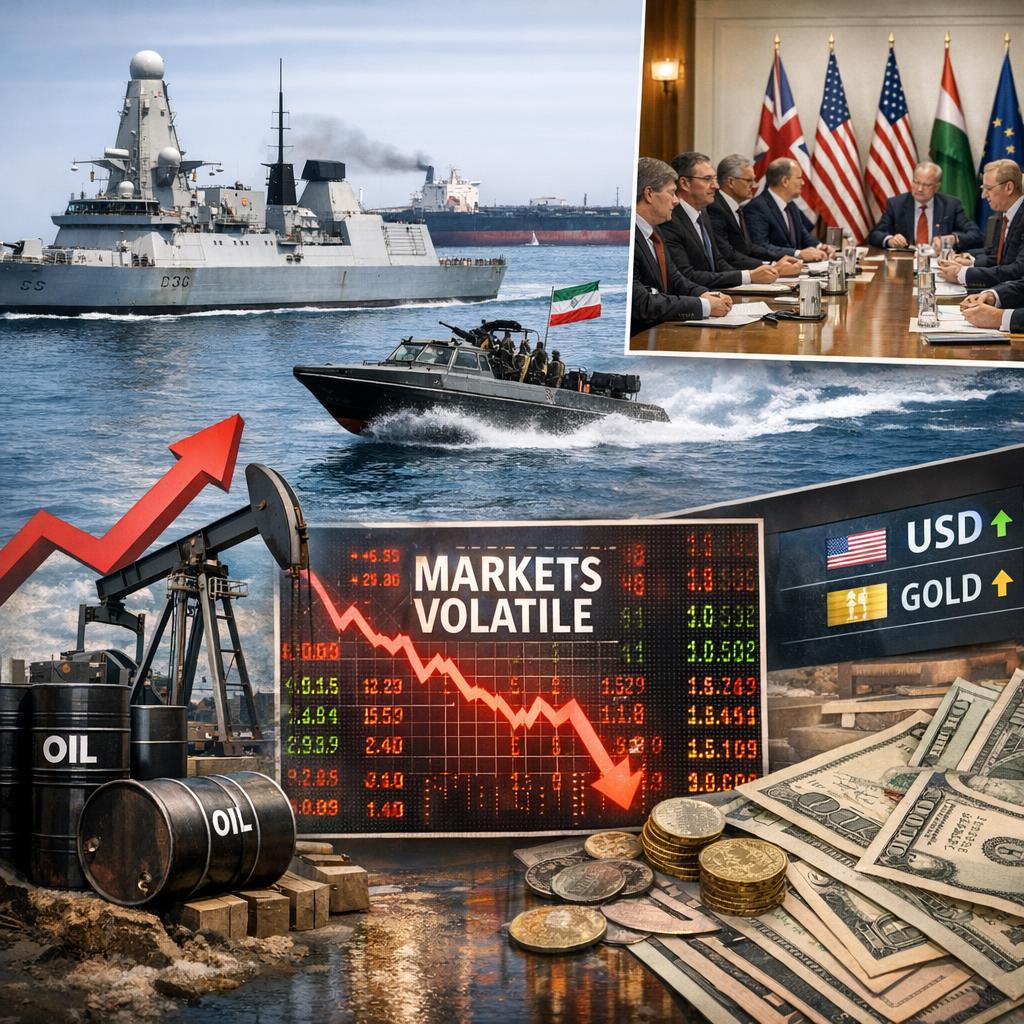
One of the most market-relevant stories on the tape right now is the UK moving to host coalition talks focused on securing the Strait of Hormuz. On the surface, this reads like familiar geopolitics: ships, naval coordination, diplomacy. But for investors, it’s really about something more immediate and measurable: how quickly a narrow chokepoint can reprice global inflation expectations, growth forecasts, and risk appetite across asset classes.
Hormuz isn’t just a headline. It’s a pricing engine.
Why Hormuz matters to markets (even if you don’t own energy stocks)
The Strait of Hormuz is one of the world’s most critical energy transit routes. When it’s perceived as vulnerable—whether through disruption, partial closure, higher insurance costs, or simply elevated military risk—markets don’t wait for barrels to go missing. They reprice the probability of disruption.
And that repricing shows up in places many investors don’t immediately connect to “oil risk”:
1) Inflation: the first domino
A higher oil price (or even the fear of one) filters into headline inflation quickly—fuel, logistics, petrochemicals, and ultimately broad-based input costs. Even in economies where energy is a smaller share of the CPI basket than it used to be, energy still acts like a tax on consumption.
For central banks, that’s awkward. If growth is already slowing, a sudden energy-driven inflation pulse can trap policymakers: cut rates and risk stoking inflation expectations, or stay restrictive and risk deepening a slowdown. Markets will often trade this tension before central banks can even communicate it.
2) Rates: “higher-for-longer” risk can reappear overnight
If investors believe an oil shock could push inflation back up, bond markets can sell off even while equities are wobbling. That’s the uncomfortable regime where both stocks and bonds struggle at the same time—particularly painful for balanced portfolios that rely on duration as a cushion.
3) FX: the quiet redistribution of winners and losers
Energy shocks tend to reshuffle currencies. Net energy importers can see pressure on their trade balance and currency, while exporters often benefit (at least initially). But there’s a second layer: “risk-off” flows. In periods of geopolitical stress, capital often moves toward perceived safety and liquidity, which can dominate fundamentals in the short run.
If you’re a global investor, this matters even if your portfolio is “domestic.” Currency translation can become a bigger driver of returns than company fundamentals for weeks at a time.
4) Credit spreads: the underappreciated transmission channel
Higher energy prices can tighten financial conditions indirectly. Some sectors get squeezed (transport, chemicals, consumer discretionary), while others see windfalls (energy producers, some industrials). But credit markets tend to look through to the macro effect: if consumers spend more at the pump, they spend less elsewhere. That can widen spreads, especially in lower-quality credit where refinancing risk is already a key theme.
What coalition talks signal (and what they don’t)
A coalition discussion to secure shipping routes is essentially an attempt to cap uncertainty. Investors should read it as: “policymakers understand the tail risk and want to reduce the probability of a worst-case outcome.”
But it’s not a guarantee that the risk premium disappears. In fact, these kinds of meetings can sometimes confirm to markets that the threat is credible enough to require coordination. The key point is that the market doesn’t need an actual shutdown for damage to occur. Elevated threat levels alone can raise:
– shipping insurance costs
– freight rates
– delivery times
– volatility in energy and rates markets
That’s enough to affect earnings expectations and multiples.
How investors can think about positioning (without trying to trade the news)
In moments like this, the biggest mistake is to treat it as a single-sector story. It isn’t. It’s a cross-asset story.
A few practical framework shifts investors often consider when Hormuz risk rises:
– Look at inflation sensitivity in your portfolio, not just interest-rate sensitivity. Companies with pricing power and resilient demand tend to behave differently from those that rely on cheap inputs and elastic consumer spending.
– Stress-test your “diversifiers.” In certain shock regimes, long-duration bonds may not hedge equities as cleanly as investors expect.
– Re-check geographic revenue exposure. A company listed in one market can be heavily exposed to regions that are energy-import dependent or more vulnerable to shipping disruptions.
– Treat volatility as information. Spikes in oil volatility and moves in inflation breakevens can be more telling than the spot oil price itself.
The bigger takeaway: chokepoints create macro events in miniature
The modern market is built on assumptions of flow: goods, energy, data, capital. Chokepoints break that illusion quickly. Hormuz is one of the clearest examples because it sits at the intersection of geopolitics and the price of money.
If this situation escalates, the story won’t stay in energy. It will show up in inflation prints, central bank reaction functions, bond volatility, equity factor performance, and currency moves—globally.
Interested to hear how you’re thinking about geopolitical chokepoint risk right now—are you treating it as a short-term volatility event, or something that changes your medium-term inflation and rates view? Comment your take.