Oil Just Dropped Hard — and That Move Matters Far Beyond Energy Stocks
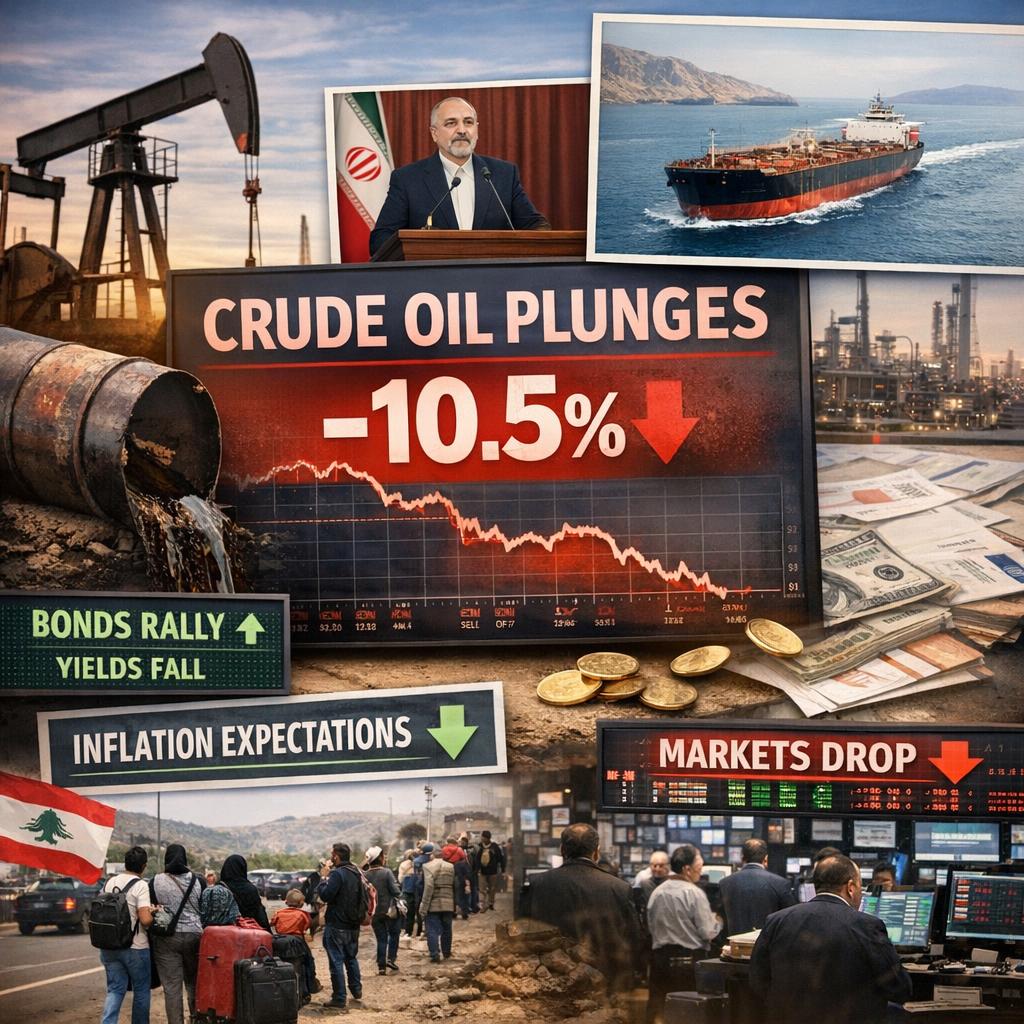
Crude prices don’t often fall double-digits on a single headline unless the market is repricing geopolitical risk in real time. That’s exactly what we saw after comments from Iran signalling it would keep the Strait of Hormuz open in the wake of a Lebanon truce. Oil sold off sharply, with crude down more than 10% on the day.
For investors, this isn’t just “good news for drivers.” It’s a fast, global rebalancing of inflation expectations, growth assumptions, and risk premia across multiple asset classes.
1) The risk premium is the real story
A big portion of the oil price in tense periods is not “today’s supply and demand” but a geopolitical insurance premium. When markets believe shipping lanes could be disrupted, they price in worst-case scenarios quickly because the consequences are nonlinear: even a short disruption through Hormuz can ripple into fuel, freight, chemicals, food inputs, and ultimately inflation.
When the perceived probability of disruption drops, that premium evaporates. The speed of the move tells you positioning was crowded and anxiety was high.
2) Inflation expectations cool — and that hits rates immediately
Energy is one of the most visible drivers of inflation expectations, especially in economies where fuel costs feed into transport, food distribution, and household sentiment. A sudden oil drop can:
– Pull down near-term inflation prints
– Reduce headline inflation anxiety in bond markets
– Lower the “need” for restrictive policy at the margin (even if central banks still focus on services inflation)
In practice, this often shows up as relief in sovereign bonds and interest-rate-sensitive equities. Even if policymakers don’t change course overnight, markets trade the direction of travel.
3) Equity winners and losers aren’t just “oil vs everything else”
Yes, energy producers typically feel immediate pressure when crude falls, and airlines or logistics can get a tailwind. But the second-order impacts are usually more interesting:
– Industrials and consumer sectors can benefit if lower energy costs improve margins
– Emerging markets that import energy can see currency and balance-of-payments relief
– Countries reliant on oil revenues can face renewed fiscal strain, impacting local assets and credit spreads
So the equity market impact isn’t uniform; it’s a rotation story, and it can be abrupt.
4) Credit markets take a cue from cash flows
High-yield energy credit is especially sensitive to oil drawdowns because price swings flow directly into cash-flow assumptions and refinancing narratives. A large move lower can widen spreads in the riskiest parts of the energy complex, even while the broader market enjoys “inflation relief.”
If you’re watching credit conditions as a lead indicator for equities, this split matters: broad risk may feel better while a pocket of the market quietly tightens.
5) The bigger message: narratives can flip fast — so risk management has to be built for that
The last few years have trained investors to anchor on “higher for longer,” “sticky inflation,” and “geopolitical fragmentation.” Those themes still exist. But this oil move is a reminder that markets can reprice a key macro input in hours.
It’s also a reminder not to confuse a one-day oil collapse with a stable new regime. The Strait of Hormuz is a structural chokepoint. The market can remove a risk premium quickly, and it can just as quickly put it back.
How I’d frame it for a global portfolio
– Treat the oil shock as a macro volatility event, not only an energy trade
– Watch inflation breakevens, front-end rates, and FX in energy-importing vs energy-exporting countries for confirmation
– Expect sector rotation rather than a simple “risk-on” blanket move
– Be cautious about assuming the geopolitical risk is “resolved” just because oil sold off
If you’re investing across regions, this is one of those moments where commodities, rates, FX, and equities are telling the same story at once: the price of uncertainty just got cheaper.
If you’ve been positioned for higher energy and persistent inflation, are you adjusting, hedging, or holding steady? Comment with how you’re thinking about it.