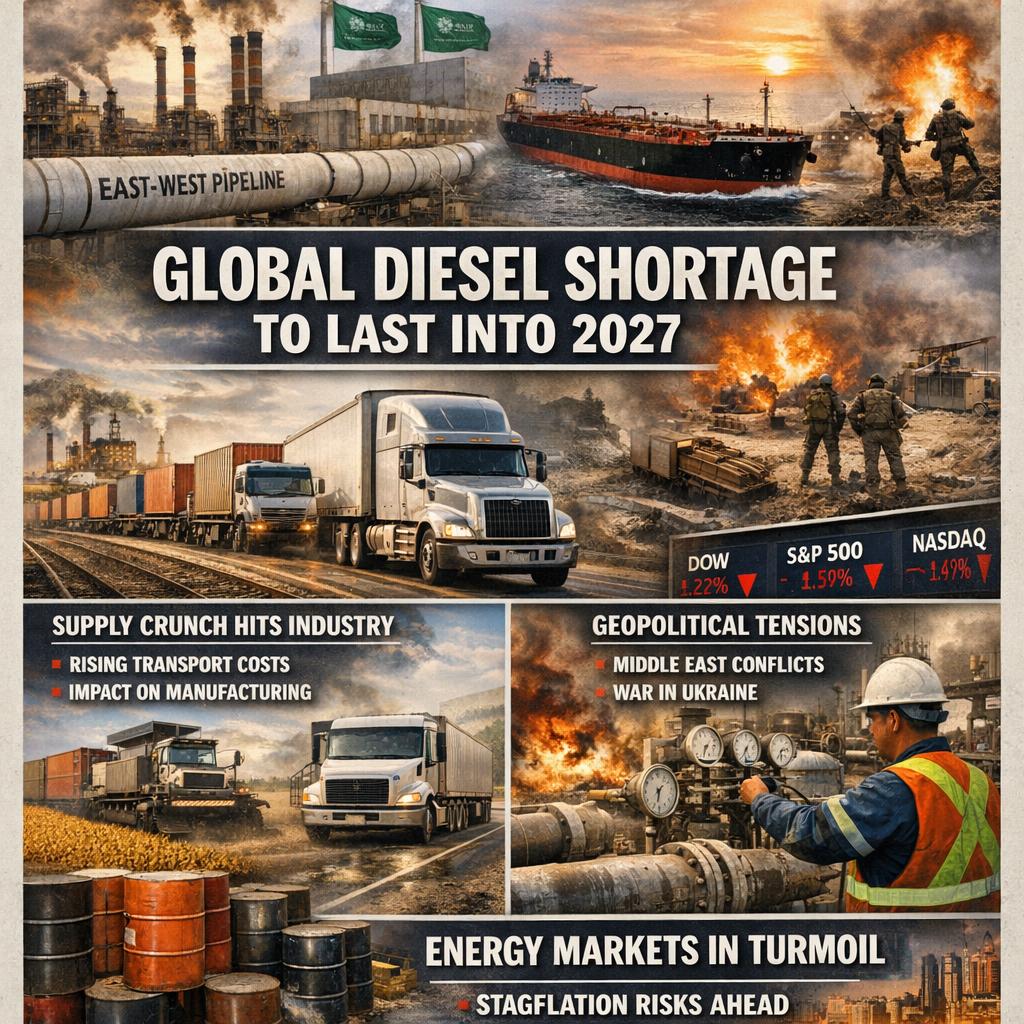
The energy markets have a way of telling a story that the major indices often try to obscure. While the Dow drifts and tech stocks capture headlines, a deeper, more structural narrative is playing out in the vital arteries of global commerce. The recent report highlighting a projected global diesel shortage lasting into 2027 is one of those critical, under-the-radar signals that deserves far more attention from investors focused on the real economy.
This isn’t a story about a fleeting supply hiccup or seasonal demand. This is a forecast of a prolonged deficit, rooted in the compounded disruptions of ongoing conflicts and geopolitical maneuvering. The implications stretch far beyond the price at the pump; they touch every link in the global supply chain, industrial output, and the relative fortunes of entire sectors. For the attentive investor, this creates a landscape of clear winners, obvious losers, and nuanced pressures that will define market performance for quarters to come.
First, consider the mechanics. Diesel is the workhorse fuel of globalization. It powers the container ships, freight trains, and heavy trucks that move raw materials and finished goods. It runs the agricultural equipment that harvests crops and the backup generators for data centers and hospitals. It’s less about discretionary travel and more about fundamental economic activity. A sustained shortage, therefore, acts as a persistent tax on logistics and production. It directly increases the cost base for manufacturing, mining, agriculture, and transportation companies. These costs will either compress margins or be passed through to consumers, adding another layer of stubborn inflation to goods, not just services.
This dynamic creates immediate pressure on sectors already facing headwinds. Any industrial or retail company with thin margins and heavy reliance on long-haul logistics is now staring at a rising, uncontrollable operating expense. It’s a fundamental re-rating of their cost structure. Conversely, it shines a spotlight on companies with pricing power and relatively insulated logistics networks. But the more interesting investment angles lie elsewhere.
Look at the strategic responses already in motion. The news of Saudi Arabia restarting its East-West oil pipeline is a direct and telling reaction to these pressures. This isn’t about increasing total crude output for the sake of it; it’s about optimization and security. By pumping crude across the kingdom to Red Sea ports, they can bypass the increasingly tense chokepoints of the Strait of Hormuz. This move speaks to a world where energy security and routing resilience are being priced in by nations and corporations alike. It benefits the logistics and infrastructure firms involved in such projects and underscores the value of assets that provide optionality and redundancy.
Furthermore, this prolonged diesel squeeze creates a powerful, multi-year tailwind for the entire energy complex, but with important distinctions. Integrated majors with significant refining capacity—those that can process crude into the high-demand distillates like diesel—stand to benefit from widening crack spreads. It’s a reminder that in the energy transition, the existing hydrocarbon infrastructure remains critically important and will see cycles of intense profitability. Pure-play refiners and midstream operators with connectivity to key markets become strategically valuable assets.
The shortage also throws a harsh light on the pace and practicalities of the energy transition. Electrification of heavy transport and industrial processes is a decades-long project. In the interim, the demand for reliable, dense energy sources like diesel remains inelastic. This reality may support continued investment in traditional energy infrastructure even amid policy shifts, creating potential value in beaten-down segments of the sector that the market has been too quick to write off.
Finally, this is a potent macro signal. A sustained diesel deficit is a constraint on growth. It acts as a natural brake on economic expansion, potentially giving central banks a complex dilemma: while their interest rate tools aim to cool demand-pull inflation, a cost-push inflation driver like energy remains largely outside their control. This could lead to a prolonged period of stagflationary pressures, favoring asset classes and sectors that perform well in such an environment—certain commodities, companies with essential goods and pricing power, and perhaps even precious metals as a hedge.
For the global investor, the takeaway is to look beneath the index-level noise. The diesel story is a fundamental thread in the fabric of the current market. It informs which industrial stocks are vulnerable, which energy plays have a hidden catalyst, and how broad macroeconomic assumptions about growth and inflation might need adjustment. It’s a reminder that sometimes, the most actionable intelligence isn’t found in an earnings report or a Fed statement, but in the quiet, relentless calculus of physical commodities and the logistics that bind the world together. I’m watching how specific companies navigate this new cost landscape very closely. Feel free to share which sectors or specific plays you think are best positioned—or most at risk—in the comments.