This week, while many were watching equity indices for signs of direction, a quieter but deeply revealing shift was taking place in the commodities space. The story wasn’t about a sudden spike in oil or gold, but rather a pronounced and sustained divergence in the performance of two key industrial metals: copper and iron ore.
Copper, often dubbed “Dr. Copper” for its PhD in economic forecasting, has been on a remarkable tear, touching levels not seen in over a year. Simultaneously, iron ore prices have languished, grappling with persistent oversupply and muted demand signals from its largest consumer. This isn’t just a blip on the radar; it’s a narrative in two parts, telling us vastly different stories about the global economy and the crossroads at which global investors currently stand.
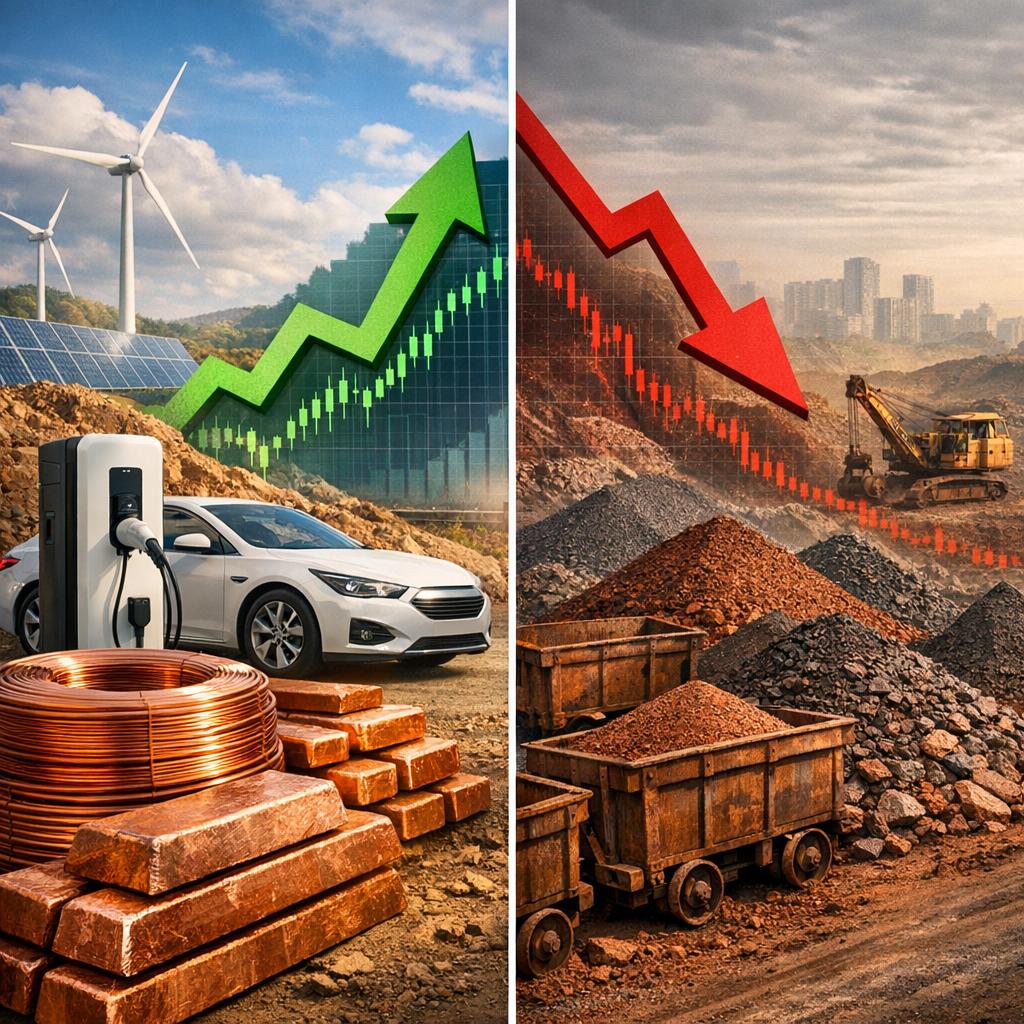
The copper rally is being powered by a confluence of forces that speak to specific, powerful investment themes. First and foremost is the structural demand story of the energy transition. Electrification, from grid infrastructure to electric vehicles to renewable energy systems, is fundamentally copper-intensive. This provides a long-term floor and growth trajectory that is somewhat decoupled from the traditional business cycle. Second, we are seeing tangible signs of tightening physical supply. Disruptions at major mines, combined with years of underinvestment in new large-scale projects, are creating a tangible squeeze. Finally, there is the financial market dimension: copper is increasingly viewed not just as a commodity, but as a strategic asset and a potent hedge against currency debasement and inflation, attracting a broader pool of capital.
The story for iron ore is its near-perfect contrast. Its fate remains inextricably tied to the health of the traditional Chinese property sector and heavy industrial activity—two areas that have been under significant pressure. Despite various stimulus measures, the recovery in property construction has been slow and uneven. The focus in China has shifted towards high-tech manufacturing and new energy sectors, which are copper-hungry but less reliant on the steel that iron ore produces. Furthermore, the major mining companies have maintained high output levels, keeping the market well-supplied against this softer demand backdrop.
For the global investor, this divergence is far more than a sector-specific curiosity. It serves as a live market map highlighting the tectonic plates of the global economy as they grind against each other. Investing based on broad “commodities” or “China growth” themes is no longer a precise enough strategy. This chart demands granularity.
It asks investors to choose, consciously or not, which narrative they believe will dominate the next phase. Are we betting on the future—the accelerated build-out of a new electrified infrastructure—by aligning with copper and its associated equities and ETFs? Or are we betting on a revival of the old paradigm—a robust, construction-led recovery in major emerging markets—which would see iron ore and steelmakers catch a powerful bid? This metal-versus-metal dynamic is a proxy for a much larger allocation decision between disruptive growth and cyclical recovery.
Furthermore, this split exposes the asymmetric risks in different regions and portfolios. Economies heavily leveraged to industrial metal exports, but with a bias towards iron ore, may face continued headwinds. Companies in the automotive, electronics, and energy sectors are quietly watching their input costs for key components rise, which will inevitably pressure margins or consumer prices down the line. For those with interests in Asian markets, particularly China, it’s a clear signal that the growth drivers are rotating, and investment theses must rotate with them.
In essence, the silent conversation between copper and iron ore is one of the most honest dialogues in the market right now. It cuts through the noise of daily headlines and central bank speculation, offering a raw look at the physical economy’s engine. Copper’s strength suggests confidence in a specific, technology-driven future. Iron ore’s weakness underscores the prolonged difficulties of a pivotal past industry finding its footing.
As an investor, ignoring this split means ignoring a fundamental diagnostic tool. It’s worth pulling up a two-year chart of these two metals side by side. The widening gap between those lines isn’t just a price difference; it’s the market voting on the shape of things to come. I’m keen to hear your interpretation of what this divergence means for your own allocation strategies. Feel free to share your thoughts in the comments.