Oil is trying to do two contradictory things at once: price a world that feels more dangerous, and p

Oil is trying to do two contradictory things at once: price a world that feels more dangerous, and price a set of headlines that hint the danger might peak sooner than feared.
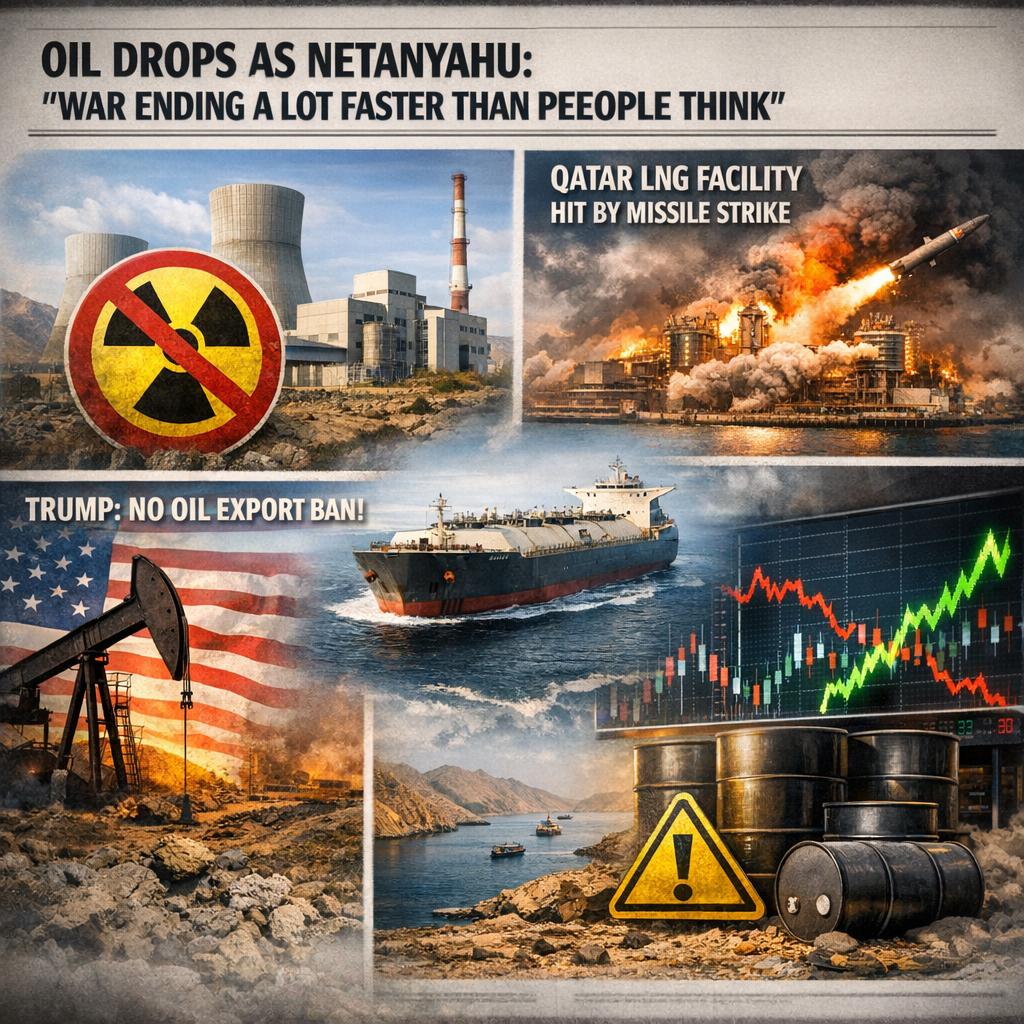
One story that captures that tension is today’s move lower in crude after Israel’s prime minister said Iran can no longer enrich uranium, alongside comments that the Middle East war is “ending a lot faster than people think.” Markets took that as a signal—rightly or wrongly—that the probability of further escalation may be falling, and oil’s “fear premium” can compress quickly when traders sense the worst-case path is less likely.
But zoom out, and the broader tape in energy still looks like a live wire.
In the same news flow, we’ve seen reports of Qatar being hit by missiles and warnings of an “Armageddon scenario” for gas markets if disruption to LNG supply proves lasting. That matters for crude investors even if they don’t trade gas. When LNG is constrained, power generators, heavy industry, and some utilities look for substitutes where they can. The fuel-switching is imperfect and region-specific, but it tightens the overall energy complex and keeps price volatility elevated. In other words: oil can drop on a de-escalation headline in one hour and be bid again the next day on infrastructure risk elsewhere.
Then there’s the policy layer. The Trump administration saying it is not considering an oil export ban is a reminder that, in a price spike, governments become market participants. Even the hint of “panic” policy can change behavior before any rule is written—refiners, producers, shipping firms, and hedgers all start gaming scenarios. For global investors, that policy optionality is part of the risk premium now: not just whether supply is disrupted, but whether flows are administratively redirected.
So what does this mean for investors globally, beyond the obvious “energy stocks up/down”?
1) Inflation expectations can move faster than central banks can communicate.
Energy is still one of the quickest conduits from geopolitics into consumer inflation prints. Even if core inflation is stable, a sharp move in fuel and shipping costs can push headline CPI around, influence wage negotiations, and change market-implied rate paths. That feeds directly into bond yields, equity multiples, and FX.
2) Equity leadership can rotate on energy intensity, not just growth vs value.
Regions and sectors with high energy import dependence tend to feel margin pressure first (transportation, chemicals, some industrials, parts of consumer). Meanwhile, energy producers and certain defense/logistics names can see earnings revisions move quickly. The market often overshoots both ways, which is why position sizing matters more than having the perfect geopolitical forecast.
3) Currency impacts are not a sideshow.
In broad strokes: higher energy prices tend to pressure importers’ trade balances and support exporters’ currencies. But in a risk-off shock, safe-haven flows can dominate. Investors holding international equities often discover their “country bet” was actually a currency bet with an energy overlay.
4) Volatility itself becomes the product.
When oil drops sharply on a headline, it can look like “the issue is resolved.” But what it often really means is that uncertainty is being repriced, not removed. Wide ranges drive hedging demand, skew in options, and knock-on effects into credit spreads for energy-sensitive issuers. If you’re a long-term investor, you don’t need to trade the noise—but you do need to recognize when the noise is changing correlations across your portfolio.
My current takeaway: today’s oil dip reads less like a return to calm and more like a market trying to separate “worst-case outcomes” from “most likely outcomes” in real time, with incomplete information. That’s exactly when investors get whipsawed if they treat a single headline as a regime change.
If you’re watching this from the perspective of a diversified portfolio, the practical frame is simple: energy shocks are rarely contained to energy. They show up in rates, FX, sector leadership, and the dispersion between winners and losers. If you’re adjusting anything, it’s usually better to adjust exposure and hedges than to make all-or-nothing calls on the next headline.
If you’re tracking the energy complex right now, comment with what you’re watching most closely: crude supply routes, LNG infrastructure risk, or policy responses.