US–Iran Talks at the Highest Level in 50 Years: Why Markets Are Watching Every Headline
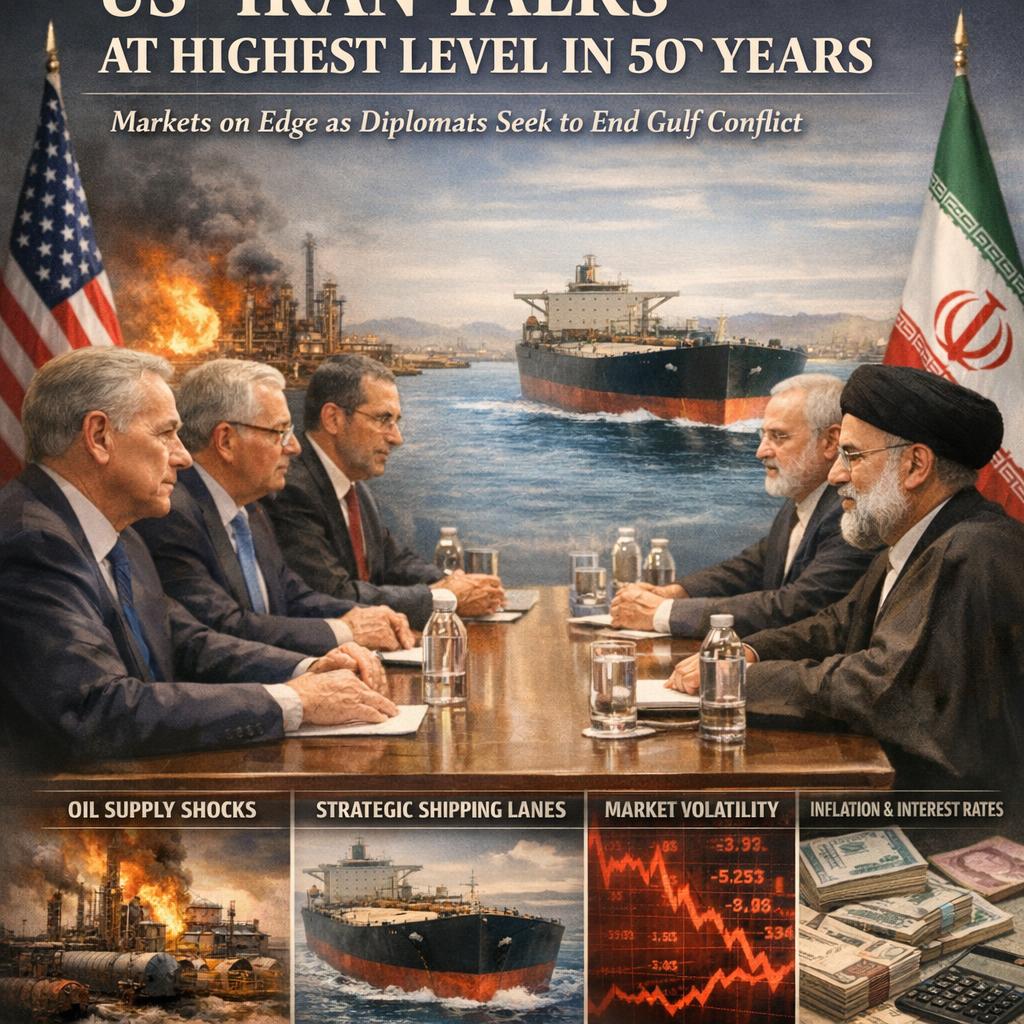
One of the more market-moving developments right now is that the US and Iran have begun their highest-level talks in five decades, with delegations discussing how to end a war that has spilled across the Gulf and triggered a global energy crisis.
Even before any formal agreement (or breakdown) happens, the mere existence of these talks matters for investors because they directly touch the most sensitive intersection in global markets: geopolitics, energy pricing, inflation expectations, and risk appetite.
1) Energy is the transmission mechanism
When conflict expands across the Gulf, the world doesn’t need a total supply cutoff to feel pain. It only needs:
– disrupted production capacity (or the fear of it)
– higher shipping and insurance costs
– rerouting of cargo
– tighter inventory behaviour (companies and countries hoarding supply “just in case”)
That’s how you get persistent volatility in crude and gas benchmarks, and why energy becomes the channel through which geopolitics hits everything else: transport costs, food prices, industrial inputs, and ultimately consumer inflation.
So, these talks are not just “political news.” They’re a potential inflection point for the energy shock that has been feeding into global pricing.
2) What investors should actually watch (not just the headline)
Markets will try to price the probability-weighted path, not the best-case scenario. A few practical indicators tend to matter more than press statements:
– Any language suggesting de-escalation timelines (ceasefires, monitoring mechanisms, corridor agreements)
– Signals that shipping lanes are becoming safer (insurance rates and freight costs can tell you as much as official communiqués)
– Evidence of actual supply normalisation (production repairs, export schedules, refinery utilisation)
– The tone from major producers and allies in the region (because they influence both physical supply and market psychology)
If you’re tracking risk, don’t just look at oil’s daily move. Look at how volatility is being priced and whether the curve is calming down (backwardation easing) or still screaming scarcity.
3) The inflation and rate-cut “second-order” effect
Energy shocks don’t just raise petrol prices; they complicate central banks’ next move.
If energy-driven inflation stays sticky, policy makers can’t relax as easily, even if growth is slowing. That has knock-on consequences across:
– government bonds (yields higher for longer, or at least more volatile)
– rate-sensitive equities (especially high-duration growth names)
– credit spreads (higher financing stress as uncertainty rises)
If these talks credibly reduce the risk of prolonged disruption, the market can start repricing inflation expectations downward. That’s when you often see a more durable “risk-on” tone: calmer bond markets, improved equity breadth, and easing pressure on emerging markets.
4) Who wins and loses if de-escalation becomes credible?
A realistic base case is not “everything snaps back overnight,” but rather “risk premium gradually comes out.”
Potential beneficiaries:
– Airlines, logistics, and transport businesses (fuel and routing risk)
– Consumer sectors in import-dependent economies (lower cost pressure)
– Emerging markets that are net energy importers (current account relief)
– Bonds, if inflation expectations cool and policy paths become clearer
Potential laggards:
– Parts of the energy complex that have benefited from elevated prices and scarcity narratives (though individual companies can still do well depending on costs and capital discipline)
– Defensive positioning that was bought mainly as a hedge against escalation
5) Portfolio behaviour: the real lesson is about concentration of risk
Events like this are a reminder that “global diversification” still has shared chokepoints. A portfolio can look diversified by geography and sector yet remain heavily exposed to the same underlying drivers: energy prices, USD liquidity, and global shipping conditions.
That doesn’t mean investors should trade every headline. It means stress-testing your exposure to:
– oil spikes
– inflation surprises
– renewed volatility in rates
– widening credit spreads
Sometimes the best action is not a dramatic rotation, but tightening up position sizing, reviewing hedges, and making sure your portfolio isn’t accidentally making one big bet on “calm seas forever.”
If you’re watching this story closely, share in the comments what you think the market is underpricing right now: a quicker path to stabilisation, or a longer period of energy volatility and stop-start negotiations.