UAE Leaving OPEC: A Small Headline With Big Implications for Global Investors
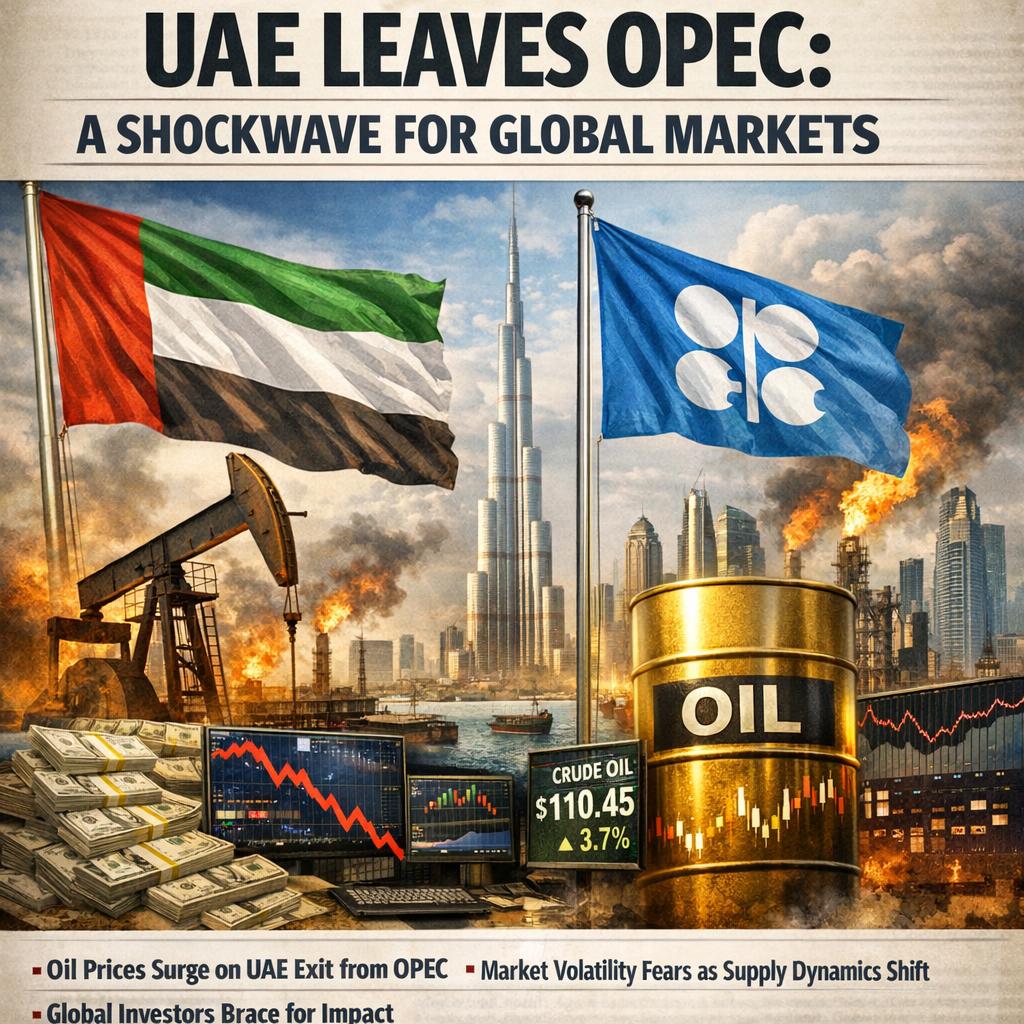
One of the most market-moving stories in the commodity world right now isn’t a surprise rate cut or an earnings miss. It’s structural: the UAE is set to leave OPEC, a move that signals a deeper fracture in the cartel model at exactly the moment oil is back in the spotlight.
For years, OPEC (and OPEC+) has operated less like a loose club and more like a coordinated supply management system. The logic is simple: if you can align production targets across key exporters, you can influence price expectations, smooth out volatility, and—crucially—shape the narrative that traders, refiners, airlines, and policymakers build into their decisions.
When a heavyweight like the UAE decides it’s had enough of production quotas, that’s not just a geopolitical footnote. It’s a market signal.
Why the UAE exit matters more than it looks
OPEC’s influence depends on credibility. Not just the announcement of quotas, but the market’s belief that members will comply, and that the group can keep internal disputes from spilling into supply outcomes.
The UAE’s frustration with quota constraints highlights a tension that never really goes away inside producer alliances:
1) High-capacity, investment-heavy producers want flexibility.
If you’ve spent billions expanding capacity, being told to keep barrels in the ground is economically and politically painful. At some point, “discipline” starts to look like “subsidising everyone else’s price.”
2) Cartels are strongest when members’ incentives align.
In periods of stable demand, coordination is easier. In periods of demand uncertainty, wars, sanctions, and inflation stress, each producer starts recalculating its own best outcome.
3) A single exit reshapes expectations.
Even if actual UAE supply doesn’t surge overnight, the psychological impact can be immediate: traders begin pricing in a higher chance of future non-compliance elsewhere, and risk premiums start to behave differently.
Oil is already elevated. This adds a different kind of risk.
With crude prices already sensitive to Middle East dynamics, the UAE’s departure adds a second layer of uncertainty—one that is less about missiles and more about market structure.
When geopolitics heats up, investors often focus on the near-term: shipping lanes, sanctions, retaliation risk, emergency releases, headline spikes. But structure is what determines whether price moves fade or persist.
A less cohesive OPEC world can mean:
More supply volatility, because coordination weakens during stress.
More price volatility, because the market has to guess policy rather than infer it.
More dispersion inside energy markets, because different grades, regions, and refining spreads react unevenly when supply expectations change.
And if you’re an investor, volatility doesn’t just hit your energy exposure. It leaks into everything.
The global investor knock-on effects: where this shows up in portfolios
1) Inflation expectations and bond yields
Oil is still one of the fastest ways inflation psychology changes. If investors believe oil will stay higher for longer because supply management is breaking down (or because output becomes more unpredictable), inflation expectations can rise—even if core inflation is sticky for other reasons too.
That matters for:
Government bonds (term premiums can widen)
Rate-sensitive equities (especially long-duration growth)
Currencies of oil-importing countries (pressure on trade balances)
2) Equities: energy wins, margins lose
Higher oil typically supports cash flows for upstream producers and integrated majors. But it compresses margins for industries where energy is a cost line they can’t fully pass through.
Watch the usual suspects:
Airlines and logistics
Chemicals and industrials
Consumer discretionary (if fuel and utility costs squeeze households)
This isn’t uniform across regions. Some markets have energy-heavy indices; others are dominated by import-sensitive sectors. That’s why an “oil story” is also a regional equity allocation story.
3) FX: winners and losers become clearer
In a world where OPEC cohesion is questioned, price swings can become sharper, and FX tends to respond quickly.
Typically:
Oil exporters’ currencies can benefit (though politics and fiscal credibility still matter)
Oil importers can face depreciation pressure
Safe havens can catch a bid if markets interpret commodity volatility as broader risk-off
4) Credit: hidden stress in the wrong places
Energy price shocks don’t just change earnings—they change default risk in pockets of the economy. The obvious area is transport. The less obvious area is anywhere input costs are high and pricing power is low.
If oil spikes while financing conditions are already tight, weaker balance sheets get exposed faster.
A subtle point: this could change the way investors price “policy credibility”
When we talk about credibility, we usually mean central banks. But in commodities, producer groups and energy policy also act like “quasi-institutions” that markets lean on for stability.
If the UAE’s exit is the start of more fragmentation, investors may demand a larger risk premium for energy—because the stabilising mechanism is weaker. That risk premium can embed itself into forward curves, equity valuations, and even capex decisions in the real economy.
So what should investors watch next?
Not just whether the UAE pumps more, but:
Whether other members push back or quietly renegotiate quotas
How OPEC+ responds in its messaging (and whether markets believe it)
Whether futures curves shift into deeper backwardation/contango (a clue about perceived scarcity vs demand fears)
How energy equities behave versus the underlying commodity (a tell for whether the market sees this as sustained)
Whether inflation breakevens and real yields react—especially in the US
The big takeaway
The UAE leaving OPEC is a reminder that oil isn’t only a supply-and-demand chart—it’s a governance story. When the governance weakens, volatility becomes a feature, not a bug. And once oil volatility rises, it doesn’t stay politely contained inside the energy sector.
If you’re positioning globally, this is one of those moments where it’s worth re-checking your portfolio’s “hidden oil exposure”—through inflation sensitivity, sector weights, and regional currency risk.
Share your take in the comments: is this the beginning of a broader OPEC fragmentation, or a one-off power move that gets priced in and forgotten?