Kevin Warsh Clears a Key Hurdle — and Markets Are About to Start Pricing a Different Fed
One of the most underappreciated “macro trades” is not a data print, a CPI surprise, or an earnings season narrative. It’s the identity of the person who sets the price of money for the world.
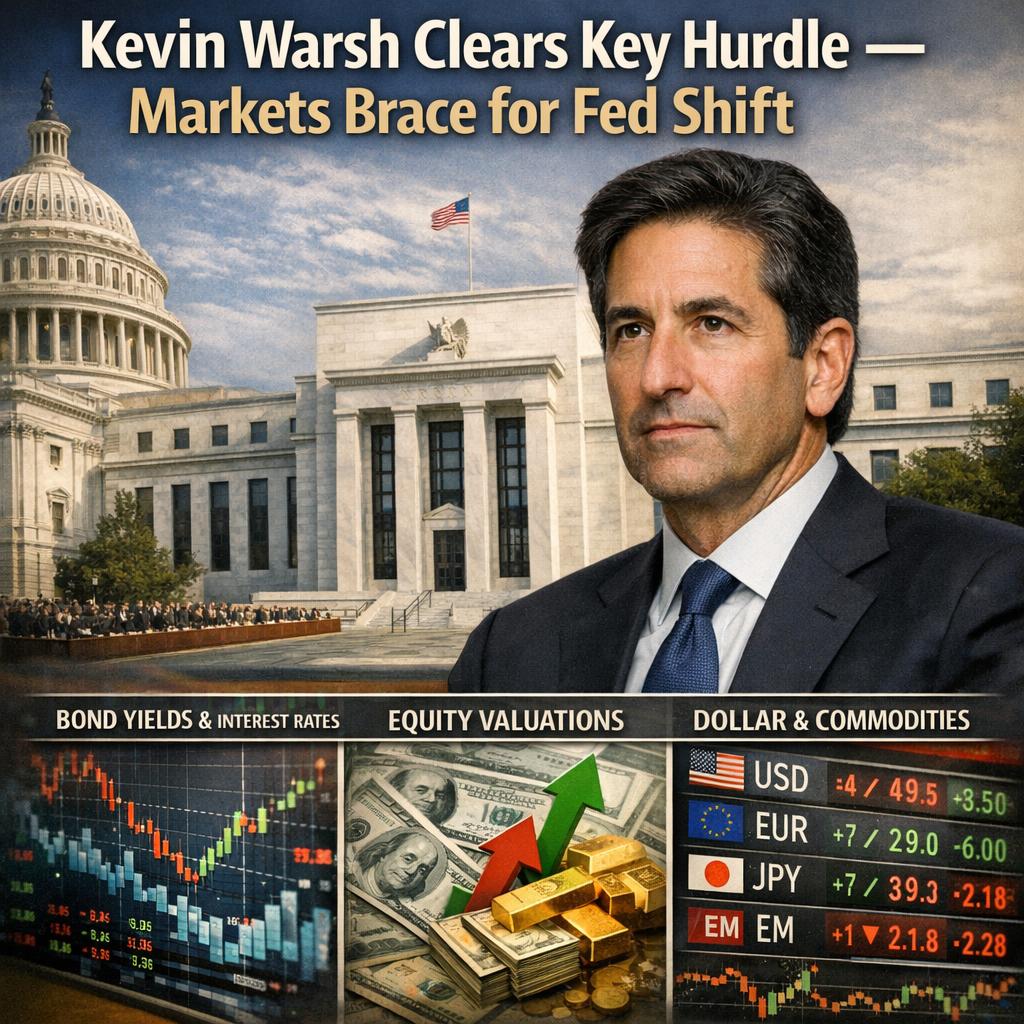
With Kevin Warsh securing approval from a Senate committee to lead the Federal Reserve, investors now have something they can actually model: a plausible base case that US monetary policy could take on a different shape—soon enough that markets will start adjusting before the first decision is even made.
This isn’t just Washington theatre. The Fed chair is, in practical terms, a global financial variable.
Why this matters beyond US borders
Even if you never buy a US stock or a US Treasury, the Fed still shows up in your portfolio.
When the Fed tightens, the dollar usually strengthens, global financial conditions tighten, and funding costs rise for everyone who borrows in dollars (which is a lot of the world). When the Fed eases, the opposite tends to happen: risk appetite improves, capital flows back out into emerging markets, and weaker currencies get breathing room.
So any shift in how the Fed thinks about inflation, growth, unemployment, and financial stability ripples outward into:
1) Global bond yields
US Treasuries aren’t just “America’s rate.” They’re the reference point for everything from European corporate credit to emerging-market sovereign debt. A change in the Fed’s reaction function can reprice the entire yield curve, which then resets discount rates globally.
2) Equity valuations (especially long-duration growth)
If investors believe the new chair will tolerate higher real rates, multiples compress—most painfully in parts of the market where profits are expected far into the future. If investors believe the chair will be quicker to cut when stress appears, that can underpin higher valuations and a stronger appetite for risk.
3) FX and commodity dynamics
A more hawkish Fed can mean a stronger dollar, which often pressures commodity prices in USD terms and squeezes countries reliant on imports. A more dovish Fed can do the opposite—supporting commodities and easing external financing constraints.
The “balance sheet” angle investors shouldn’t ignore
What makes Warsh particularly interesting isn’t just where he might land on the fed funds rate. It’s the growing expectation that the Fed’s balance sheet will be treated as a more explicit part of the policy toolkit.
That matters because markets often focus on the headline rate and forget that liquidity is policy too.
If the next Fed leadership places greater weight on the size and composition of the balance sheet (quantitative tightening, reinvestment pace, and how reserves are managed), then we’re not only debating “how high” or “how fast” rates go.
We’re debating:
– How tight financial conditions will be even if rates stay unchanged
– How much duration the private market must absorb (which impacts term premia)
– How resilient risk assets are during stress events when liquidity gets scarce
In plain terms: two Feds can set the same policy rate and still deliver very different outcomes for markets depending on how they manage liquidity.
What global investors should watch next
If you’re managing money (or simply trying to make sense of the crosswinds), the next phase is about signals—because expectations will move faster than policy.
Here’s what I’d be watching closely:
1) The messaging around the Fed’s “mandate”
Does the tone lean heavily toward inflation credibility and keeping policy restrictive? Or does it lean toward flexibility, growth risks, and financial stability concerns?
2) The tolerance for market stress
Markets will test any new chair, not out of malice, but out of habit. Credit spreads, equities, and volatility will all act like a feedback mechanism. The question is whether the Fed responds quickly to tightening conditions or holds the line.
3) The interaction with fiscal policy
If deficits remain large, Treasury issuance remains heavy. That puts more pressure on the bond market to absorb supply. The Fed’s balance sheet posture matters even more in that context—and term premia can become the story again.
Positioning implications (without pretending there’s one “right trade”)
This isn’t a call to buy or sell anything on the headline alone. It’s a reminder that portfolios built for one regime can struggle in another.
In a world where the Fed’s policy framework may be reinterpreted, investors often reduce it to “Warsh = hawk” or “Warsh = dove.” That’s too simplistic. The more important point is that uncertainty around the reaction function tends to raise the value of:
– Diversification across asset classes and geographies
– Liquidity (because liquidity is optionality)
– Risk management over prediction
It also tends to punish complacency—especially where valuations assume a smooth path to lower rates and easy financial conditions.
Big picture
The Fed chair isn’t just a US story. It’s a global pricing mechanism, a confidence anchor, and—when politics gets loud—an institutional stress test.
Warsh clearing this hurdle doesn’t instantly change policy. But it moves the odds enough that markets will begin doing what they always do: pricing the next regime before it arrives.
If you’re watching this story too, share what you think the market is underpricing right now: the rates path, the balance sheet, or the political risk premium.