The Market’s New Fault Line: Geopolitics Is Back in the Driver’s Seat (and Tech Is Still the Transmission)
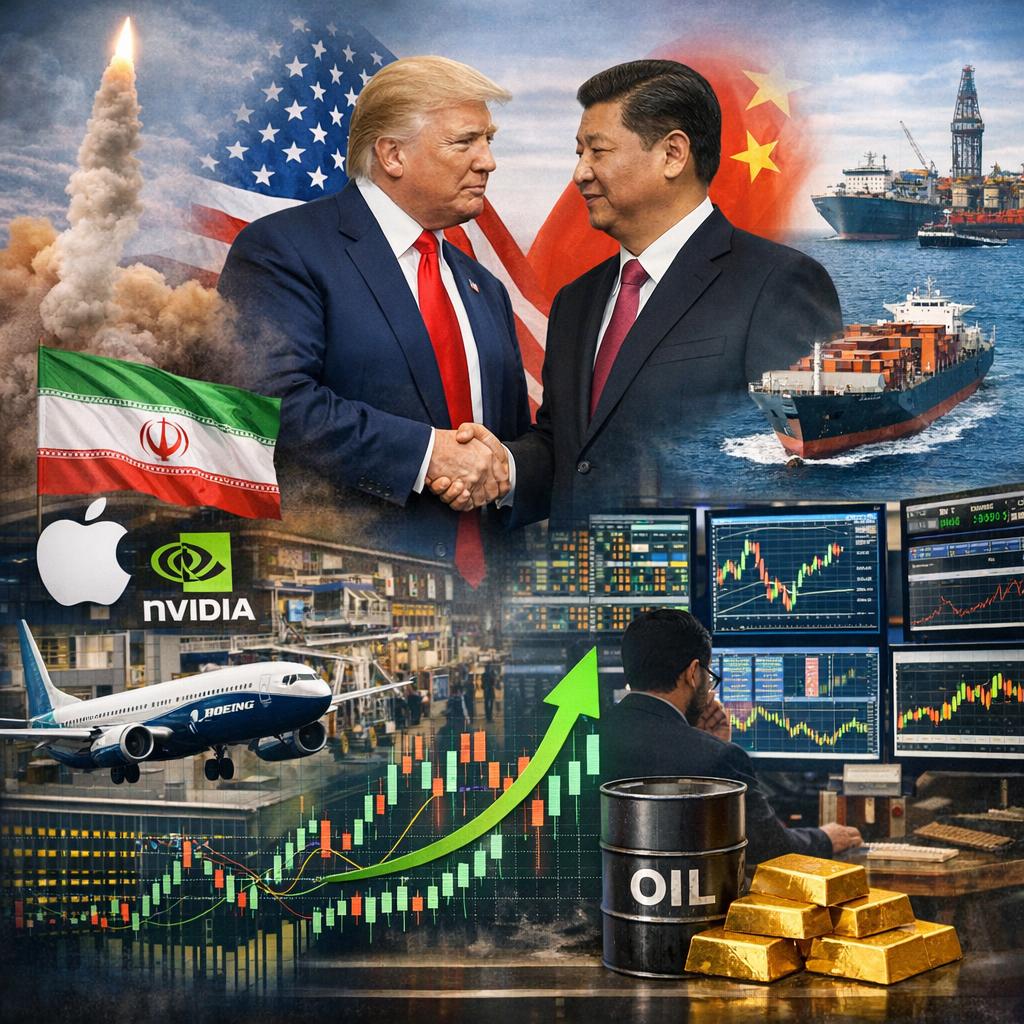
One of the most important stories on my screen today isn’t an earnings surprise or a quirky valuation debate. It’s the growing mix of geopolitics and mega-cap market leadership—specifically the backdrop of renewed Iran-U.S. maneuvering alongside an upcoming Trump–Xi summit, all while household market bellwethers like Apple, Nvidia, and Boeing sit near technically constructive levels.
On the surface, those can feel like separate lanes: diplomats on one side, charts on the other. But for global investors, they’re increasingly part of the same trade.
Why this matters more than the headline itself
Markets can digest almost anything—bad news, good news, even confusion—so long as the path forward is legible. The challenge with geopolitics isn’t simply “risk.” It’s that geopolitical outcomes tend to arrive as discontinuities: gaps, repricings, sudden rotations, and correlations that snap when you least expect them to.
When negotiations and summits start filling the calendar, investors should think less in terms of predicting outcomes and more in terms of mapping exposures.
Because whether you’re in US equities, European industrials, emerging market ETFs, crypto, commodities, or a diversified pension portfolio, geopolitics has a habit of showing up through three transmission channels:
1) Energy and input costs
Even the hint of tension in the Middle East can put a bid under crude, refined products, and shipping/insurance costs. That then leaks into inflation expectations, which leaks into bond yields, which then lands right back on equity multiples—especially in long-duration growth names.
Global impact: higher energy costs act like a tax on consumers and on import-dependent economies, while benefiting producers and certain commodity-linked markets.
2) Supply chains and capex confidence
A high-profile US–China summit isn’t just theatre. It influences how companies think about inventory, suppliers, pricing power, and where they place the next factory. Investors often focus on tariffs, but the bigger story is corporate confidence. When CEOs can’t model policy risk, they either delay spending or demand a higher return threshold—both of which can slow growth.
Global impact: manufacturing-heavy regions and exporters feel it quickly, and markets that depend on global trade flows can swing hard on changes in tone.
3) Defense, aerospace, and “strategic industrials”
Boeing being in focus alongside geopolitics is not an accident. Defense budgets, procurement timelines, and strategic alliances all tend to become more relevant when the global order feels less stable. That doesn’t mean every defense or aerospace stock is automatically a buy—it means the sector’s narrative can strengthen quickly, and capital can rotate there fast.
Global impact: industrial leaders with government-linked demand can become perceived “stability” plays, even when the broader market is choppy.
The other half of the story: leadership concentration isn’t going away
While geopolitics can trigger volatility, the market’s leadership structure still matters day-to-day. When names like Apple and Nvidia sit near buyable areas, they effectively become the index’s steering wheel. In practical terms, that means:
– If leadership holds, dips can get bought even when headlines look ugly.
– If leadership breaks, the same headlines become accelerants rather than noise.
This is why global investors—especially those outside the US—need to keep an eye on US mega-caps even if they don’t own them directly. They influence risk sentiment, dollar flows, and how quickly money moves in or out of international assets.
How I’m thinking about positioning (without pretending to forecast leaders in a summit)
I don’t think the winning approach here is trying to “trade the meeting” or “guess the statement.” The edge is in being structurally prepared:
– Know your hidden energy sensitivity. Many portfolios are short energy without realizing it (consumer, airlines, logistics, some EMs).
– Be honest about duration risk. If yields jump on inflation fears, the most expensive growth exposures can re-rate fast.
– Separate “great company” from “fragile entry.” Even the best businesses can be poor buys if the setup is extended and volatility is rising.
– Hold a watchlist that reflects regimes, not just themes: energy, defense/industrials, quality cash flow, and a short list of true market leaders.
The key takeaway for global investors
This is a market where headlines can move futures overnight, but leadership and liquidity decide what sticks by the close. Geopolitics can change the temperature quickly; mega-cap leadership determines whether the market sweats it off or spirals into something more.
If you’re watching this same mix of summit risk and big-tech leadership, share what you’re focusing on right now—energy, semis, industrials, defensives, or something else entirely.