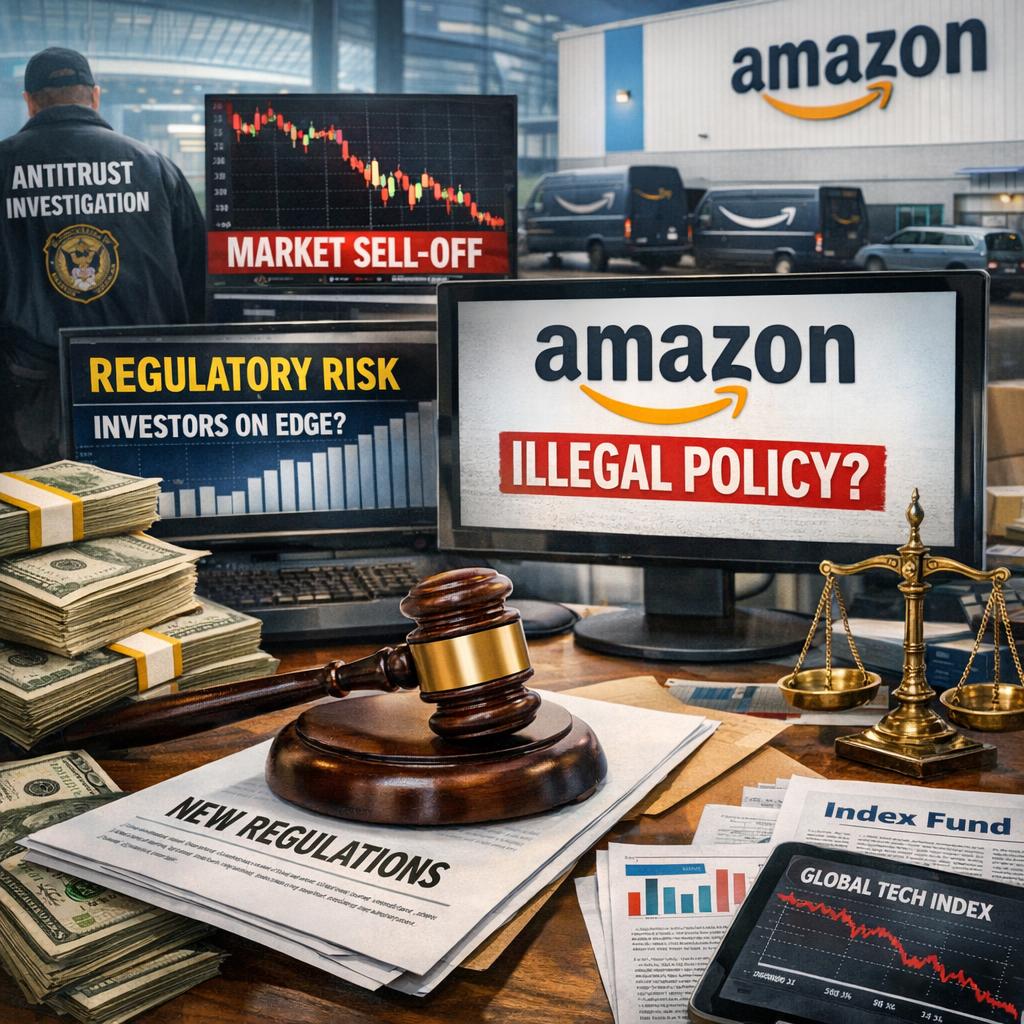
Amazon’s “now illegal” policy is a reminder that regulatory risk isn’t a footnote anymore — it’s a valuation input
One of the easiest mistakes investors make in long bull markets is assuming the “rules of the game” stay mostly fixed. Earnings grow, margins expand, multiples rise, and the story becomes all about execution: logistics, cloud capacity, ad monetisation, and whether the next quarter beats consensus by a few cents.
But every so often, a headline drops that forces markets to price something less comfortable: the idea that certain profit pools were never fully durable in the first place.
That’s why the recent reporting around Amazon allegedly generating millions from a policy that is now illegal matters well beyond the company itself. Whether you hold AMZN directly, own it through an index fund, or hold businesses that compete with or depend on Amazon’s ecosystem, this is the kind of development that can change the shape of future cash flows — not because demand disappears overnight, but because the “take rate” and operating rules can be rewritten.
The part investors often underestimate: regulation doesn’t just create fines, it rewires incentives
Most people hear “illegal policy” and immediately jump to penalties and headlines. Yes, enforcement can bring one-off costs: settlements, refunds, legal fees, and plenty of management distraction.
But the more important market question is structural: if a practice becomes prohibited, what replaces it?
When regulators step in, they usually aim to tilt the playing field toward transparency, competition, and consumer protection. For a platform business, that can mean:
1) Less freedom to design fees and charges in ways that maximise revenue per transaction
If a revenue stream relied on complexity, default options, or behavioural “nudges,” it can be vulnerable. Once the rule changes, the same transaction volume may produce less profit.
2) A forced shift in how marketplaces balance buyers, sellers, and the platform
Amazon’s marketplace is a three-sided machine: consumer experience, seller economics, and platform monetisation. A rule that helps one side can pressure another. If something previously boosted platform revenue but squeezed sellers (or limited choice), regulators will tend to push back.
3) Spillover pressure on adjacent segments
Even if the issue is tied to a specific policy, it rarely stays neatly boxed in. Regulators, journalists, and competitors look for patterns. That increases the chance of follow-on scrutiny in other areas of the business model.
How this hits investors globally: it’s about “platform risk,” not just one company
Amazon is a US-listed name, but its gravity is global. The impact travels through portfolios in a few ways:
Index concentration
If you own broad global equity funds, you likely own Amazon. When mega-cap platforms face regulatory tightening, it can subtly weigh on index returns — especially if multiple large platform names face similar shifts at the same time. It’s rarely catastrophic on its own, but it matters when markets are already sensitive to earnings quality and margin durability.
Second-order effects on logistics, retail, and cloud ecosystems
Amazon’s choices influence pricing norms across e-commerce, delivery expectations, and the competitive intensity of retail. If a policy change reduces certain monetisation levers, the company may respond elsewhere: changes to seller tools, ad pricing strategy, delivery economics, or cost discipline. Those responses can affect smaller listed firms worldwide that operate in the same value chain.
The “regulatory discount” can widen for the whole platform cohort
Markets love clean, repeatable cash flows. When the regulatory environment becomes more hostile or unpredictable, investors often demand a higher risk premium. That shows up as a multiple that doesn’t expand as easily, even when revenue growth remains solid. Over time, that can be the difference between “great business” and “great stock.”
The bigger theme: the era of frictionless expansion is ending
This isn’t just about Amazon. It fits into a broader shift where governments are less willing to let dominant platforms self-regulate the fine print. The bar is rising around consumer rights, pricing clarity, data practices, and competitive fairness.
Investors don’t need to become legal experts to respond intelligently. But they do need to update their mental model. A useful way to think about it is this:
In the past, growth investors could treat regulation as a low-probability shock.
Now it behaves more like a recurring operating constraint.
That changes how you assess quality. “High margin” isn’t enough. The better question is: how defensible are those margins under tighter rules?
What I’m watching next (and what long-term investors should track)
1) Management language around “compliance” versus “business as usual”
When companies start pre-emptively adjusting policies, it can signal they expect the net to tighten further. That can be healthy in the long run, but it may pressure near-term monetisation.
2) Seller and consumer experience metrics
If policy changes shift costs around, it often shows up in seller churn, ad spend efficiency, delivery promises, or customer satisfaction. Those are early indicators of whether the business is absorbing the change or passing it through.
3) Whether regulators treat this as a one-off or a template
The market reaction tends to be more muted if it’s contained. It gets more serious if the same logic is applied broadly across the platform model.
Bottom line
This story is a reminder that in 2026, “risk” isn’t only rates, growth, or geopolitics. Sometimes it’s a single line in a policy playbook that used to generate easy money — until it doesn’t.
If you’re investing globally, this is worth paying attention to because it’s not just about Amazon’s next quarter. It’s about how the world is changing its expectations of platform power, and how quickly those expectations can translate into rules that reshape earnings.
If you’re tracking the big platform names in your portfolio, comment with the main risk you think markets are still underpricing right now: regulation, competition, or consumer fatigue.