Oil’s Sudden Slide Is a Quiet Reminder: Geopolitics Can Move Your Portfolio Faster Than Earnings
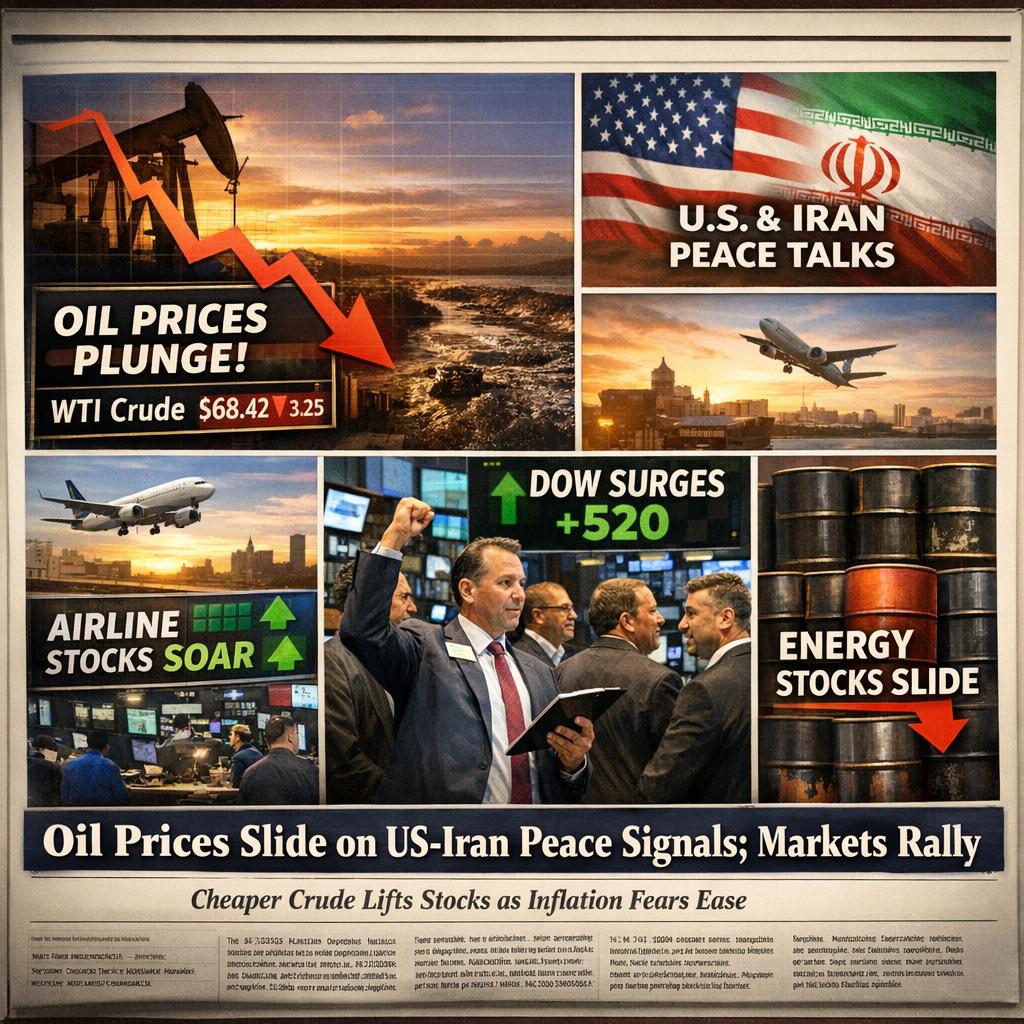
Over the past couple of sessions, one of the most telling cross-asset moves hasn’t been in tech or even in rates—it’s been in crude. Reports pointing to warmer “peace signals” between the US and Iran helped push oil lower, and markets responded exactly the way you’d expect when energy input costs look like they might ease: airline stocks caught a bid, broader indices firmed up, and the overall tone turned a little more “risk-on.”
On the surface, this looks like a simple story: less geopolitical risk, more supply confidence, lower oil, happier consumers and companies. But for global investors, the implications run deeper than a one-day move in WTI.
1) Lower oil is a de facto global stimulus—just not for everyone
When oil drops meaningfully, it functions like a tax cut for oil-importing economies. Transport, logistics, manufacturing, and consumer spending all benefit at the margin. That’s why you often see airlines and other travel-related names react immediately: fuel is a direct, visible cost line, and the market doesn’t wait around to price that in.
But the other side of the trade matters just as much. Oil-exporting countries, energy-heavy equity indices, and commodity-linked currencies can feel the pinch quickly. If you’re invested globally, a fall in crude can quietly rotate leadership across regions: importers look stronger, exporters look more fragile, and capital shifts accordingly.
2) The inflation narrative can change faster than central banks do
Energy prices feed into inflation expectations even when central banks say they’re “looking through” short-term volatility. In reality, markets rarely look through anything when it hits the headline CPI basket and consumer sentiment at the same time.
If oil weakness persists, it can soften near-term inflation prints and give policymakers more room to hold or ease—especially in economies where inflation has been stubborn. That doesn’t mean rate cuts become inevitable, but it does mean the range of plausible outcomes widens. For investors, widening ranges are the whole game: they influence bond yields, equity multiples, and the relative appeal of cash versus duration.
3) Sector leadership can flip without warning
One of the most underappreciated portfolio risks is “macro-rotation risk”—the idea that the market can change what it rewards even if your companies execute perfectly.
When oil falls:
– Energy equities can lag, not necessarily because fundamentals collapse overnight, but because the market discounts forward pricing.
– Industrials and consumer names can perk up on margin relief.
– Airlines and transport often get a short-term tailwind.
– Some emerging markets benefit (lower import bills), while others suffer (lower export revenues).
If you’re running a concentrated portfolio—whether it’s heavy US tech, dividend energy, or EM commodity exposure—oil is one of those variables that can hit your factor bets from the side.
4) Don’t confuse “good news” with “less risk”
Markets like reduced tail risk. But geopolitics has a way of moving in bursts, not smooth lines. A headline-driven drop in oil can be real and justified, and still be fragile.
For long-term investors, the takeaway isn’t to trade every diplomatic signal. It’s to recognize that the “macro floor” under certain sectors can shift quickly. If your portfolio depends on structurally high energy prices, you should at least be honest about that dependency. If your portfolio has been squeezed by sticky inflation, cheaper energy can be a genuine release valve.
What I’m watching next
The key question is whether this move becomes a trend (driven by actual supply expectations and follow-through) or remains a headline wobble. If crude continues to slide while equities rise, it can reinforce a “soft-landing” style narrative. If crude bounces back sharply, you can get the opposite: renewed inflation anxiety, higher yields, and another round of style rotation.
If you’re invested across regions and sectors, this is one of those moments worth paying attention to—not because it changes everything, but because it reveals what the market is most sensitive to right now.
If you’ve been adjusting your portfolio around energy exposure, airlines, or inflation-sensitive assets, feel free to share how you’re thinking about it in the comments.