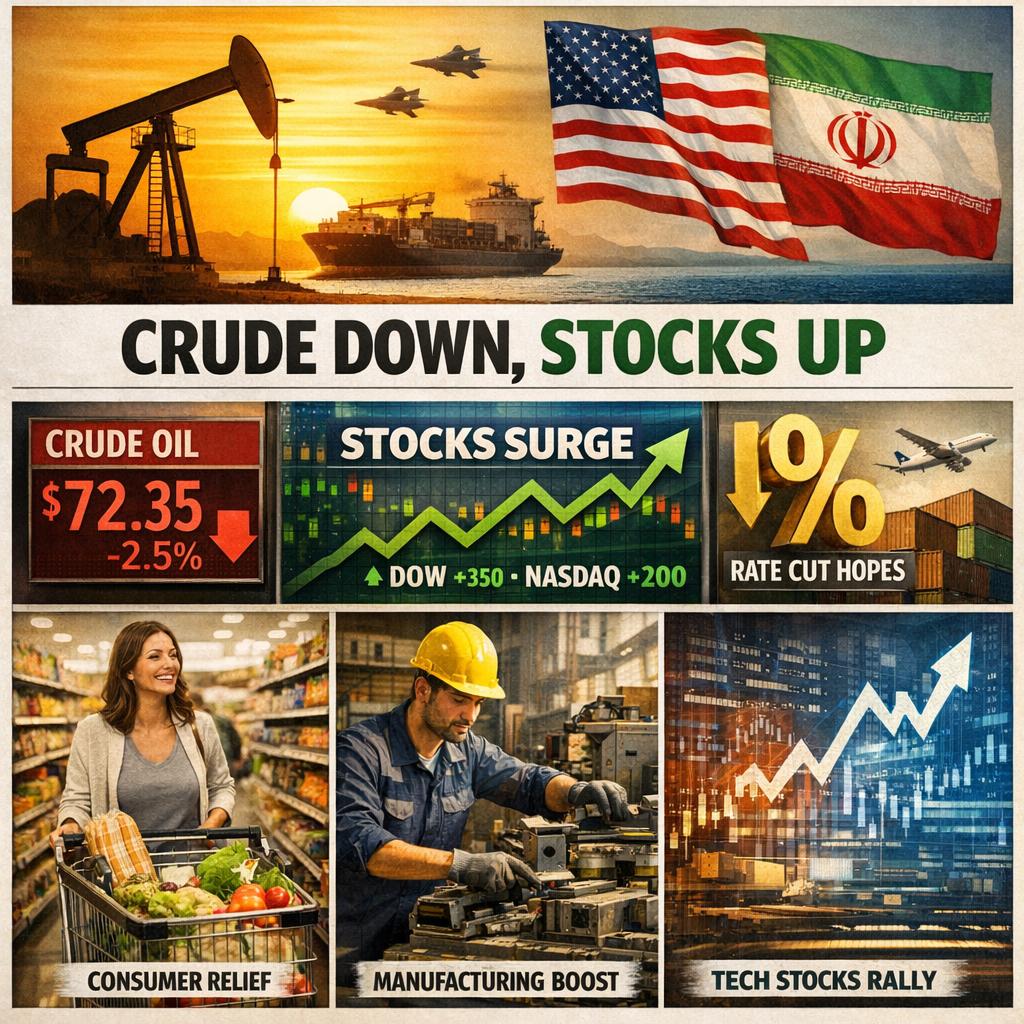
Markets caught a rare breath this week as reports of progress toward a U.S.-Iran breakthrough cooled oil’s rally and helped push US equities back into the green. The headline looks simple—crude down, stocks up—but the investor takeaway is bigger: geopolitics doesn’t just change the “risk mood.” It flows straight through inflation expectations, central bank pricing, and global asset allocation in real time.
Why oil is the first domino
When tensions flare in the Gulf, oil isn’t just another commodity. It’s a global input cost with a fast transmission mechanism:
1) Inflation impulse
Higher crude filters into transport, manufacturing, food supply chains, and ultimately consumer inflation prints. Even if the move is driven by risk premium rather than demand, markets tend to treat it as inflationary until proven otherwise.
2) Rates repricing
If oil is pushing inflation higher, investors start to worry central banks will have less room to cut—or may even have to hold rates higher for longer. That’s when bond yields can lift, financial conditions tighten, and equity valuations get pressured.
3) Growth tax
Energy spikes act like a tax on consumers and businesses. For import-heavy economies (think parts of Europe and Asia), that tax can be sharper.
So when oil “pares gains” on the hint of diplomacy, you’re seeing the market unwind a stack of knock-on assumptions: less inflation stress, less rate pressure, less growth drag.
The equity bounce makes sense—but it’s not uniform
It’s tempting to treat “stocks up on peace hopes” as a blanket risk-on signal. In practice, lower oil can create winners and losers across regions and sectors:
– Consumers and consumer-facing businesses often benefit as fuel and logistics costs ease.
– Airlines, shipping, and transport-sensitive names typically get an immediate sentiment tailwind.
– Energy producers can face headwinds if crude gives back too much, too fast—especially if positioning had become crowded.
– High-duration equities (growth/tech) often like anything that lowers long-term rate expectations, because discount rates matter. But they’re also vulnerable if the next data print re-ignites inflation fears.
Globally, the impact is even more asymmetric. Net oil importers generally cheer falling crude; exporters feel the opposite. That’s one reason you can see US indices rally while certain commodity-linked markets lag, or vice versa, depending on the direction and speed of the move.
What this means for investors watching from outside the US
Even if you never trade oil directly, the crude tape can end up steering your portfolio via currencies, bonds, and equity multiples.
– FX: Oil-sensitive currencies can swing quickly. Importer currencies may stabilise when crude falls; exporter currencies can soften.
– Bonds: If oil-backed inflation fears fade, longer-dated yields can calm down, easing pressure on mortgages, credit, and equity valuation models.
– Credit spreads: Risk premium coming out of energy can tighten spreads marginally—until the next headline reintroduces uncertainty.
And this is the key point: these moves are often driven by probability, not certainty. Markets aren’t pricing “peace achieved”; they’re pricing “odds improved,” and those odds can whipsaw with the next report.
The bigger lesson: watch the second-order effects
The sharpest portfolio outcomes rarely come from the headline itself. They come from the chain reaction:
Geopolitical news → oil risk premium → inflation expectations → rates → equity multiples and credit conditions.
That’s why days like this matter. They remind investors that “macro” isn’t a separate universe from stocks—it’s the plumbing underneath the entire pricing system.
If you’re building a global portfolio, it’s worth thinking in scenarios rather than predictions. What happens to your holdings if crude jumps again? What happens if it keeps easing? Which positions benefit from lower inflation volatility, and which ones quietly rely on higher commodity pricing?
If you’ve been tracking this oil-to-equities link in your own portfolio, share what you’ve noticed—especially across different regions and sectors.